The Engineering Secrets Behind the World’s Tallest Building
Standing at an astonishing 828 meters (2,717 feet), the Burj Khalifa dominates the skyline of Dubai and remains the tallest building ever constructed by humanity. Since its completion in 2010, millions of visitors have gazed upward and asked the same question:
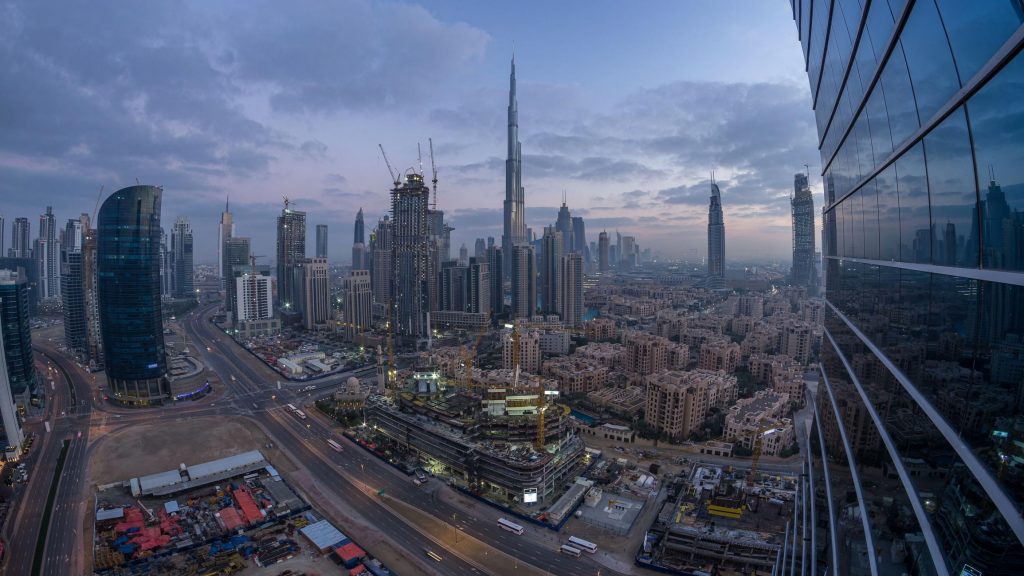
How can a structure this tall support its own weight without collapsing?
The answer lies in a combination of advanced engineering, innovative architecture, material science, and careful consideration of geography and economics. Every component of the Burj Khalifa—from its foundation to its pinnacle—was designed to overcome the immense challenges associated with constructing a supertall skyscraper.
In this article, we’ll explore the history, engineering principles, foundation design, architectural innovations, and environmental considerations that allow the Burj Khalifa to remain standing safely despite weighing hundreds of thousands of tons.
The Challenge of Building the World’s Tallest Structure
Gravity is relentless.
Every floor, wall, column, beam, and mechanical system in a skyscraper adds weight to the structure below it. As buildings become taller, the lower levels must support increasingly massive loads.
For conventional low-rise buildings, gravity loads are relatively straightforward to manage. However, once a building exceeds several hundred meters in height, engineers face a new set of challenges:
- Massive vertical loads
- Wind-induced movement
- Structural vibration
- Foundation settlement
- Thermal expansion
- Material limitations
The Burj Khalifa had to solve all of these problems simultaneously while reaching unprecedented heights.
The result is one of the most sophisticated structural systems ever created.
A Brief History of the Burj Khalifa
Construction of the Burj Khalifa began in 2004 as part of Dubai’s ambitious plan to diversify its economy beyond oil revenues and establish itself as a global business and tourism hub.
Developed by Emaar Properties and designed by the architectural firm Skidmore, Owings & Merrill (SOM), the tower was led by architect Adrian Smith and structural engineer William F. Baker.
The building officially opened in January 2010 and immediately became:
- The world’s tallest building
- The world’s tallest free-standing structure
- The building with the highest occupied floor
- The building with the highest observation deck
The tower contains residential apartments, offices, restaurants, observation decks, and the luxurious Armani Hotel.
But creating such a structure required entirely new approaches to engineering.
Engineering Principle #1: High-Performance Structural Materials
One reason the Burj Khalifa doesn’t collapse under its own weight is the extraordinary strength of its construction materials.
Ultra-High-Strength Concrete
Most residential concrete has a compressive strength of approximately 3,000 to 4,000 PSI.
The Burj Khalifa uses specially engineered concrete capable of exceeding 10,000 PSI.
This high-strength concrete allows the lower portions of the tower to withstand the enormous compressive forces generated by hundreds of floors stacked above.
The concrete mix was specially designed to withstand:
- Extreme desert temperatures
- High humidity
- Shrinkage cracking
- Long-term creep effects
During construction, concrete was often poured at night to prevent excessive heat from compromising quality.
Reinforced Structural Core
Embedded within the concrete are large quantities of reinforced steel.
The steel provides tensile strength while the concrete handles compression, creating a composite structural system capable of supporting extraordinary loads.
Together, these materials form the backbone of the tower’s stability.
Engineering Principle #2: The Revolutionary Buttressed Core System
Perhaps the most important innovation in the Burj Khalifa is its structural design known as the buttressed core.
Structural engineer William Baker developed this concept specifically for supertall buildings.
How the System Works
The building’s floor plan resembles a giant Y shape when viewed from above.
Each wing of the Y acts as a buttress that supports the other two wings.
Instead of relying on a single central core, the structure uses three interconnected wings to distribute loads efficiently.
This configuration provides:
- Exceptional lateral stability
- Reduced structural twisting
- Better weight distribution
- Increased resistance to wind forces
The system allows gravity loads to flow efficiently into the foundation while simultaneously resisting horizontal forces.
Without the buttressed core concept, reaching 828 meters would have been far more difficult and expensive.
Engineering Principle #3: The Y-Shaped Footprint
The Y-shaped floor plan serves more than just an architectural purpose.
It is a critical structural feature.
Weight Distribution
A traditional rectangular tower concentrates loads around a central axis.
The Burj Khalifa distributes its weight across three wings.
This creates multiple load paths, reducing stress concentrations and improving overall stability.
Resistance to Torsion
Tall buildings are vulnerable to twisting forces caused by wind.
The Y-shaped geometry naturally resists torsional movement by creating balanced structural resistance around the core.
This helps prevent excessive rotational motion during storms.
Engineering Principle #4: A Tapered Design That Confuses the Wind
At extreme heights, wind often becomes a greater engineering challenge than gravity.
If a skyscraper presents a consistent profile from top to bottom, wind can create organized vortexes that induce dangerous oscillations.
This phenomenon is known as vortex shedding.
Why Wind Is Dangerous
When air flows around a tall structure, alternating low-pressure zones develop on opposite sides.
These pressure fluctuations can cause rhythmic movement.
If the frequency of these forces matches the building’s natural frequency, resonance can occur.
Historically, resonance has caused severe structural failures.
The Burj Khalifa’s Solution
The tower gradually tapers as it rises.
The setbacks occur at different heights on each wing, creating 27 distinct floor plate configurations.
Because the building constantly changes shape, wind cannot establish a consistent flow pattern.
Engineers often describe this strategy as “confusing the wind.”
By disrupting vortex formation, the tower significantly reduces wind-induced forces.
This innovation is one of the primary reasons the building remains stable despite its immense height.
Engineering Principle #5: Controlled Flexibility
Many people assume that skyscrapers must remain completely rigid.
In reality, flexibility is essential.
A perfectly rigid tower would be vulnerable to cracking under wind loads and thermal expansion.
Designed to Move
The Burj Khalifa is engineered to sway slightly.
During strong winds, the top of the structure can move approximately 1.5 to 2 meters.
While this sounds dramatic, the movement is gradual and carefully controlled.
Most occupants never notice it.
The motion occurs so slowly that the human vestibular system typically cannot detect it.
Why Swaying Is Beneficial
Allowing limited movement:
- Reduces structural stress
- Dissipates energy
- Improves occupant comfort
- Prevents brittle failure
Engineers often compare the concept to a tree bending during a storm rather than snapping.
Foundation Design: Supporting a Giant on Desert Sand
One of the most remarkable aspects of the Burj Khalifa is that it stands on relatively weak desert soils.
The challenge was transferring hundreds of thousands of tons of weight safely into the ground.
The Raft Foundation
At the base of the structure sits a reinforced concrete mat approximately 3.7 meters (12 feet) thick.
This enormous raft spreads loads across a large area.
Deep Foundation Piles
The raft is supported by 192 reinforced concrete piles.
These piles extend approximately 50 meters (164 feet) into the ground.
Interestingly, the Burj Khalifa does not have the deepest foundation in the world despite being the tallest building.
Friction Pile Technology
The piles function primarily through skin friction.
As loads are transferred downward, friction develops between the pile surfaces and surrounding soil and rock.
This friction resists movement and prevents settlement.
The combined system effectively anchors the tower to underlying geological formations while distributing loads safely.
Geography and Site Conditions
Dubai’s environment presented several unique challenges.
Desert Soil
Unlike cities built on hard bedrock, Dubai consists largely of sand deposits over weak sedimentary layers.
Traditional shallow foundations would have been insufficient.
The deep pile system was specifically designed to overcome these geological limitations.
Groundwater Concerns
Dubai’s groundwater contains significant salt concentrations.
Saltwater can accelerate corrosion of reinforcement steel.
To combat this problem, engineers used:
- High-density concrete
- Protective coatings
- Corrosion-resistant materials
- Extensive waterproofing systems
These measures help ensure long-term durability.
Architecture Inspired by Nature
The Burj Khalifa’s form is not purely structural.
Its design was inspired by the Hymenocallis flower, a desert plant with a symmetrical arrangement of petals.
Functional Beauty
The flower-inspired geometry offers several advantages:
- Structural efficiency
- Aerodynamic performance
- Visual elegance
- Balanced load distribution
This demonstrates how architecture and engineering can work together to create both beauty and functionality.
The tower’s narrowing profile also enhances visual proportions while improving structural performance.
Innovative Construction Methods
Building the world’s tallest structure required innovations in construction technology.
Record-Breaking Concrete Pumping
Concrete had to be pumped to unprecedented heights.
At the time, the Burj Khalifa set world records for vertical concrete pumping.
Specialized pumping systems delivered concrete hundreds of meters above ground while maintaining quality and consistency.
Climbing Formwork
Engineers utilized self-climbing formwork systems that moved upward as construction progressed.
These systems:
- Improved efficiency
- Enhanced worker safety
- Reduced construction time
- Maintained precision
Advanced Monitoring Systems
Throughout construction, engineers continuously monitored:
- Structural movement
- Settlement
- Temperature effects
- Material performance
This data ensured that the building behaved exactly as predicted.
The Economics Behind the Tower
Constructing the Burj Khalifa was not solely an engineering challenge—it was also an economic strategy.
Diversifying Dubai’s Economy
Dubai sought to establish itself as:
- A tourism destination
- A financial center
- A luxury real estate market
- A global business hub
The tower became an international symbol that attracted investment and visitors from around the world.
Tourism Revenue
Millions of tourists visit the Burj Khalifa annually.
Observation decks, luxury residences, office space, and hospitality services generate substantial revenue.
The tower functions not only as a building but as an economic engine for the city.
What If the Burj Khalifa Collapsed?
Theoretical discussions about a Burj Khalifa collapse often capture public imagination.
Given its height and location, a catastrophic failure would be devastating.
Potential consequences could include:
- Massive structural destruction
- Severe loss of life
- Extensive debris fields
- Major economic disruption
- Global engineering investigations
However, such a scenario remains extraordinarily unlikely.
The building incorporates multiple layers of structural redundancy and safety systems.
Engineers designed it to withstand:
- Extreme wind events
- Seismic activity
- Temperature fluctuations
- Long-term material degradation
In practice, the probability of a complete collapse is exceedingly low.
Lessons for Future Skyscrapers
The Burj Khalifa fundamentally changed the way engineers approach supertall structures.
Its innovations have influenced projects worldwide.
Key lessons include:
Aerodynamics Matter
Modern skyscrapers increasingly use shape modifications to reduce wind loads.
Structural Systems Must Evolve
Traditional frame systems become inefficient at extreme heights.
The buttressed core demonstrated a new path forward.
Foundations Are Critical
No matter how impressive a tower appears above ground, its success depends on what lies below.
Flexibility Is Essential
Allowing controlled movement improves both safety and performance.
Conclusion
The Burj Khalifa does not collapse under its own weight because it represents one of the greatest achievements in structural engineering history.
Its stability comes from a carefully integrated system of ultra-high-strength materials, a revolutionary buttressed core, a Y-shaped footprint, sophisticated wind engineering, controlled flexibility, and a massive deep-pile foundation.
Every aspect of the building was optimized to solve the challenges associated with extreme height.
Far from being a simple skyscraper, the Burj Khalifa is a demonstration of what becomes possible when architecture, engineering, construction technology, economics, and innovation work together toward a single ambitious goal.
More than a decade after its completion, it remains the gold standard for supertall building design and a testament to humanity’s ability to push the limits of construction without compromising safety.
The fact that an 828-meter tower can stand securely on desert soil, withstand powerful winds, and support its own immense weight is not merely impressive—it is one of the most remarkable engineering accomplishments of the modern era.
No responses yet