Few elements of urban infrastructure receive less attention than public toilets. They are rarely featured in architectural magazines, seldom discussed in city planning debates, and almost never celebrated as landmarks. Yet public sanitation facilities represent one of the most fundamental components of a functional, inclusive, and healthy city.
Every day, millions of people navigate urban environments while relying on access to safe, clean, and convenient restroom facilities. Parents with young children, seniors, tourists, transit users, delivery workers, construction crews, taxi drivers, pregnant women, and individuals with medical conditions all depend on access to public sanitation. Despite this reality, many North American cities continue to struggle with a chronic shortage of well-maintained public toilets.
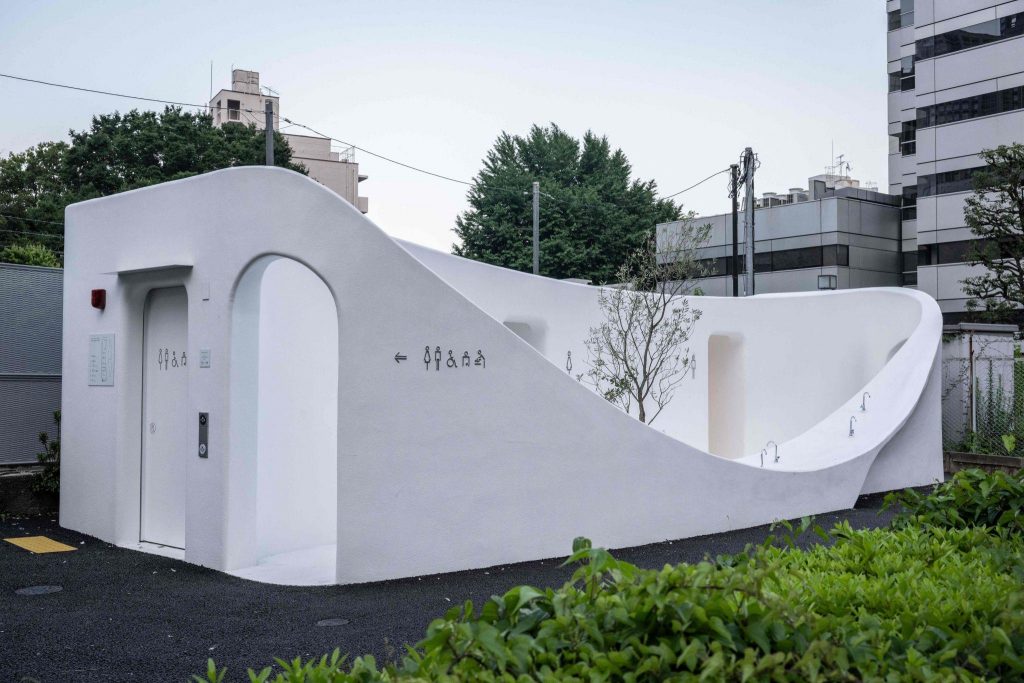
In contrast, Japan has become internationally recognized for transforming public restrooms into architectural landmarks, cultural assets, and symbols of civic pride. From transparent smart toilets in Tokyo parks to architect-designed restroom pavilions that blend seamlessly into urban landscapes, Japanese cities demonstrate that public sanitation can be both functional infrastructure and exceptional design.
For architects, civil engineers, urban planners, and construction professionals, the contrast raises an important question: why do some cities successfully integrate public toilets into their urban fabric while others view them primarily as maintenance liabilities?
The answer extends beyond architecture. It involves infrastructure planning, public health policy, urban economics, construction strategies, maintenance systems, and cultural attitudes toward public space.
Public Toilets as Critical Urban Infrastructure
Modern cities rely on extensive networks of infrastructure that often remain invisible to the public. Water systems, sewer networks, transportation corridors, electrical grids, and telecommunications infrastructure all support daily urban life.
Public toilets should be viewed through the same lens.
Rather than being standalone amenities, they function as nodes within larger urban systems. They support mobility, tourism, commerce, accessibility, public health, and social inclusion.
When sanitation facilities are unavailable, entire groups of people become effectively excluded from public space. Older adults may limit their travel distances. Parents may avoid certain neighborhoods. Transit users may alter their routes. Individuals with health conditions may choose not to participate in public activities altogether.
The availability of public toilets therefore directly influences how people experience and use cities.
This relationship is often overlooked during planning processes, where transportation infrastructure, housing, and economic development receive significantly more attention. Yet sanitation infrastructure can have equally profound effects on urban vitality.
Cities that neglect public restroom access frequently experience secondary consequences, including increased pressure on private businesses, reduced pedestrian activity, public health challenges, and diminished quality of public space.
The North American Challenge
Many municipalities throughout North America face substantial difficulties maintaining public restroom facilities.
Vandalism, misuse, drug-related activities, homelessness, and security concerns have dramatically increased operating costs. In some cities, individual restroom facilities require hundreds of thousands of dollars annually for staffing, cleaning, repairs, and maintenance.
As a result, many public washrooms are designed with durability rather than user experience as the primary objective. Stainless steel surfaces, exposed fixtures, anti-vandal materials, harsh lighting, and minimal architectural investment have become common features.
While these design strategies may reduce damage, they often create environments that feel institutional, uncomfortable, and unwelcoming.
This approach creates a problematic cycle.
Poorly designed facilities discourage responsible use and public respect. As conditions deteriorate, maintenance costs increase. Municipalities respond by reducing investment or closing facilities altogether, which further reduces access and increases pressure on remaining infrastructure.
Ultimately, cities begin treating public toilets as liabilities rather than essential public services.
From an infrastructure perspective, this is equivalent to reducing transportation investment because roads require maintenance. The challenge is not whether sanitation infrastructure should exist, but how it can be designed, managed, and funded effectively.
Japan’s Alternative Model
Japan offers a compelling alternative.
Across Tokyo and other major cities, public toilets are integrated into urban environments as valued civic assets. Rather than hiding them, municipalities and private partners often celebrate them through innovative architecture and thoughtful design.
The internationally recognized Tokyo Toilet Project exemplifies this philosophy. Developed through collaboration between government agencies, private organizations, and prominent architects, the initiative transformed public restrooms into highly visible architectural interventions.
Some facilities feature transparent walls that become opaque when occupied. Others function as sculptural objects within parks and public plazas. Several were designed by internationally renowned architects who approached restroom design with the same rigor typically reserved for museums or cultural institutions.
The underlying message is significant.
These projects communicate that public sanitation deserves the same design attention as any other component of the urban environment.
This philosophy fundamentally changes public perception. When infrastructure is treated as valuable, citizens are more likely to respect and care for it.
Architecture and Civic Trust
One of the most interesting aspects of Japan’s restroom design strategy is the emphasis on transparency.
The transparent toilet concept addresses one of the most common concerns associated with public restrooms: uncertainty.
Users often hesitate to enter unfamiliar facilities because they cannot assess cleanliness, safety, or occupancy conditions beforehand.
By allowing visitors to visually inspect facilities prior to use, transparent designs increase confidence and reduce anxiety. Once occupied, privacy is restored through electronically controlled opaque glass.
From an architectural perspective, this approach transforms trust into a design feature.
Rather than relying solely on operational management, the building itself communicates information to users.
This principle extends beyond restrooms. Contemporary architecture increasingly incorporates transparency, visibility, and user-centered design to improve experiences in hospitals, transportation hubs, educational facilities, and civic buildings.
The lesson for designers is clear: architecture can solve psychological challenges as effectively as functional ones.
The Economics of Public Sanitation
A common assumption is that high-quality public toilets are prohibitively expensive.
However, evidence suggests that long-term operational strategies often have a greater impact on costs than initial construction expenditures.
In Japan, many restroom facilities are supported through partnerships involving transportation agencies, corporations, philanthropic organizations, and municipal governments.
Rather than treating public toilets as isolated facilities, stakeholders integrate them into broader urban development and public service strategies.
This diversified funding model reduces the burden on local governments while ensuring higher maintenance standards.
Importantly, these partnerships recognize that public toilets generate indirect economic value.
They support tourism, encourage pedestrian activity, increase public comfort, and contribute to the attractiveness of commercial districts.
Viewed through this lens, restroom facilities function as enabling infrastructure that supports broader economic activity.
Public Toilets and Urban Economic Development
The relationship between sanitation infrastructure and local economic development is often underestimated.
Consider the example of Tokyo’s yokocho districts—dense clusters of small restaurants, bars, and local businesses located near transportation hubs.
These establishments frequently operate in extremely compact spaces with limited room for private restroom facilities.
The availability of nearby public toilets reduces operational costs and allows businesses to occupy smaller footprints. This contributes to higher density, lower startup barriers, and greater diversity within local commercial ecosystems.
As a result, unique urban environments can flourish.
For urban planners and developers, this highlights an important principle: shared infrastructure can create economic opportunities.
Just as shared transportation networks support commerce, shared sanitation infrastructure can enable smaller businesses to thrive.
The result is often a more vibrant and diverse urban landscape.
Public Health and Sanitation Engineering
Public sanitation is fundamentally a public health issue.
Historically, inadequate sanitation has been associated with disease transmission, environmental contamination, and reduced quality of life.
Modern cities are not immune to these challenges.
When public restroom access becomes limited, individuals may resort to unsanitary alternatives, increasing risks to both public health and environmental quality.
Outbreaks of sanitation-related diseases in urban environments demonstrate that access to hygiene infrastructure remains as important today as it was centuries ago.
For civil engineers, this reinforces the importance of integrated sanitation planning.
Effective wastewater management requires more than treatment plants and sewer networks. It also depends on ensuring that people have practical access points within the urban environment.
Without these access points, even sophisticated infrastructure systems cannot achieve their intended outcomes.
Smart Infrastructure and Data-Driven Maintenance
Emerging technologies are creating new opportunities for public sanitation management.
In India, several innovative projects have incorporated smart monitoring systems into public restroom networks.
These facilities collect operational data regarding cleanliness, usage patterns, maintenance requirements, and equipment performance.
Rather than relying solely on fixed cleaning schedules, operators can deploy resources based on actual conditions.
This approach aligns with broader trends in smart city development, where sensors and real-time data improve infrastructure performance.
For facility managers and municipal governments, predictive maintenance can significantly reduce operating costs while improving user experiences.
The concept is familiar within civil engineering. Bridges, transportation systems, and utilities increasingly utilize monitoring technologies to optimize maintenance schedules.
Applying similar principles to sanitation infrastructure represents a logical extension of smart infrastructure management.
Integrating Public and Commercial Functions
Another emerging trend involves combining public amenities with revenue-generating activities.
Examples include restroom facilities integrated with cafés, retail spaces, and community services.
These hybrid models address a common challenge: financial sustainability.
Instead of relying entirely on public funding, commercial activities help offset operational costs. Simultaneously, increased foot traffic enhances safety, improves visibility, and creates more active public spaces.
From an urban design perspective, these mixed-use models offer several advantages.
They activate underutilized areas, encourage social interaction, and transform infrastructure into destinations rather than purely functional facilities.
Such approaches reflect broader shifts toward multifunctional urban environments where infrastructure, commerce, and community activities coexist.
Cultural Perspectives and Design Excellence
Perhaps the most significant difference between Japan and many Western cities lies in cultural attitudes toward public space.
Japanese design traditions emphasize cleanliness, hospitality, and respect for shared environments. These values influence everything from transportation systems to streetscapes and public facilities.
Public toilets are viewed not merely as necessities but as opportunities to demonstrate civic responsibility and hospitality.
This perspective influences planning decisions, funding priorities, maintenance standards, and architectural ambition.
As a result, restroom facilities become integrated components of the urban experience rather than neglected afterthoughts.
For architects and planners, this highlights the importance of cultural context in infrastructure development.
Technical solutions alone cannot solve urban challenges. Long-term success depends on aligning infrastructure with social values and public expectations.
Historical Lessons from Ancient Rome
The importance of sanitation infrastructure is not a modern discovery.
Ancient Rome developed one of history’s most sophisticated urban sanitation systems through extensive sewer networks, public baths, and water management infrastructure.
The Cloaca Maxima, one of the world’s earliest major sewer systems, helped support population growth while improving urban health conditions.
Public baths served not only hygienic functions but also social, cultural, and economic roles.
These facilities became gathering places that strengthened civic life and contributed to urban identity.
The lesson remains relevant today.
Infrastructure performs best when it serves multiple purposes simultaneously. Public toilets, like Roman baths, can support health, commerce, accessibility, social interaction, and urban vitality.
Conclusion
Public toilets may seem like a minor component of urban infrastructure, yet their influence extends throughout the city.
They affect mobility, public health, economic development, accessibility, social inclusion, and the overall quality of urban life. They shape how people experience public spaces and determine who can comfortably participate in city life.
Japan demonstrates that public sanitation infrastructure can be clean, beautiful, technologically advanced, and financially sustainable when approached through comprehensive planning and collaborative partnerships.
For civil engineers, architects, urban planners, and construction professionals, the challenge is not simply to build more toilets. It is to rethink how sanitation infrastructure fits within broader urban systems.
The future of public restroom design will likely depend on integrated approaches that combine architecture, technology, data-driven maintenance, public-private partnerships, and thoughtful urban planning.
Ultimately, the question is not whether cities can afford to invest in high-quality public toilets.
It is whether modern cities can afford not to.
As populations grow, urban density increases, and expectations for inclusive public spaces continue to evolve, sanitation infrastructure will remain a critical measure of how effectively cities serve the people who use them.
No responses yet