A 4,500-Year-Old Engineering Question That Still Challenges Modern Experts
The Great Pyramid of Giza is arguably the most studied construction project in human history. It has been surveyed, measured, excavated, scanned, modeled, and analyzed by generations of engineers, archaeologists, architects, historians, and scientists.
Yet despite more than four millennia of investigation, one fundamental question remains unanswered:
How was the Great Pyramid actually built?
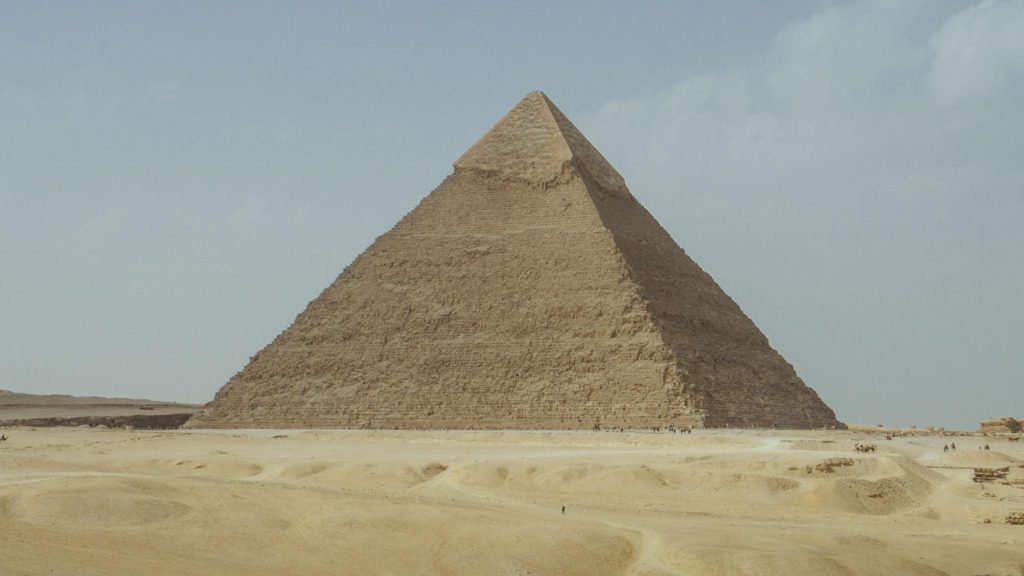
For civil engineers and construction professionals, this question is particularly fascinating because the challenge extends far beyond archaeology. The Great Pyramid represents one of the largest and most precise construction projects ever completed without modern machinery, steel, concrete, computer modeling, or powered equipment.
Today, the structure continues to serve as a case study in project management, logistics, surveying, materials handling, and large-scale construction planning.
But perhaps the most intriguing aspect of the puzzle is that no single construction theory has achieved universal acceptance.
The Scale of the Great Pyramid
Completed during the reign of Pharaoh Khufu around 2560 BCE, the Great Pyramid originally stood approximately 146.6 meters (481 feet) tall.
For nearly 4,000 years, it remained the tallest man-made structure on Earth.
The statistics alone are staggering:
- Approximately 2.3 million stone blocks
- Estimated total mass exceeding 6 million tons
- Base dimensions accurate to within centimeters
- Alignment to true north with extraordinary precision
- Granite structural beams weighing up to 70 tons
From a modern engineering perspective, these numbers raise immediate questions about transportation, lifting systems, workforce organization, surveying techniques, and quality control.
The pyramid was not merely large.
It was exceptionally precise.
Its geometric accuracy would be impressive even by modern standards.
Ancient Egyptian Surveying: Precision Without Modern Technology
One of the most remarkable achievements of the Great Pyramid is its alignment.
Modern surveyors rely on GPS systems, laser scanners, total stations, and advanced computational tools. Ancient Egyptian engineers had none of these technologies.
Instead, evidence suggests they relied heavily on astronomy.
By carefully tracking the movement of stars and establishing reference points through repeated observations, Egyptian surveyors created one of the most accurately aligned structures in history.
This achievement demonstrates an often-overlooked reality:
The builders of the pyramids were not primitive laborers struggling against impossible odds.
They were highly skilled engineers, surveyors, planners, and craftsmen operating within one of the world’s most sophisticated early civilizations.
Why Ancient Egypt Could Build Megaprojects
Large construction projects require more than technical expertise.
They require resources.
Ancient Egypt possessed a unique combination of factors that made megaprojects possible.
Annual Nile flooding produced enormous agricultural surpluses, generating enough food to support thousands of workers who were not directly involved in farming.
This allowed Egyptian society to develop highly specialized professions, including:
- Architects
- Stone masons
- Surveyors
- Engineers
- Quarry workers
- Boat builders
- Administrators
- Medical personnel
- Logistics coordinators
Equally important was Egypt’s centralized bureaucracy.
Archaeological discoveries show that Egyptian administrators maintained detailed records of labor, food supplies, transportation operations, taxation, and construction logistics.
One famous example is the diary of Merer, a project supervisor whose records describe transporting limestone blocks from the Tura quarries to Giza.
These documents provide direct evidence of construction logistics.
However, they leave one critical question unanswered:
Exactly how were the stones assembled into the pyramid?
Debunking the Slave Labor Myth
Modern archaeological evidence has largely disproven the long-standing claim that the pyramids were built by slaves.
Excavations at Giza have revealed worker settlements complete with:
- Bakeries
- Workshops
- Medical facilities
- Housing complexes
- Cemeteries
The evidence suggests a workforce composed largely of skilled laborers and specialized crews rather than enslaved populations.
From a modern construction management perspective, this interpretation makes sense.
Projects of such complexity require trained personnel, organization, and specialized knowledge.
The Great Pyramid was not simply a labor problem.
It was an engineering problem.
The Ramp Theory: The Traditional Explanation
For decades, the most widely accepted explanation has been the ramp theory.
In its simplest form, workers transported stone blocks on sledges and dragged them up a ramp as construction progressed.
The concept appears straightforward.
Unfortunately, engineering calculations reveal major challenges.
To maintain a safe hauling gradient for multi-ton stone blocks, the ramp would need to be extremely long.
Some estimates suggest a straight ramp could extend nearly two kilometers.
At that scale, the ramp itself would require enormous quantities of material.
In some calculations, the volume of the ramp begins to rival the volume of the pyramid itself.
This creates a difficult question:
Would ancient builders really construct a massive structure simply to build another massive structure?
Even more problematic is the lack of archaeological evidence.
No definitive remains of such a giant ramp have been discovered.
The Spiral Ramp Hypothesi
To solve the problems associated with a straight ramp, some researchers proposed a spiral ramp wrapped around the pyramid’s exterior.
This approach significantly reduces material requirements while maintaining a workable slope.
However, it introduces a different engineering challenge.
The pyramid’s edges needed to remain perfectly aligned throughout construction.
Surveyors required clear sight lines to corners and faces in order to verify geometry.
A large external spiral ramp would obstruct many of these reference points.
As a result, questions remain about whether such a system could maintain the extraordinary precision visible in the finished structure.
Jean-Pierre Houdin and the Internal Ramp Theory
One of the most influential modern theories was proposed by French architect Jean-Pierre Houdin.
Houdin suggested that builders initially used a conventional external ramp for the lower portion of the structure before transitioning to an internal ramp hidden within the pyramid itself.
This theory gained considerable attention because it appears to solve several longstanding problems simultaneously.
It reduces the need for massive external infrastructure while preserving workable transportation routes to higher levels.
Houdin also suggested that the Grand Gallery may have functioned as part of a counterweight system used to raise granite beams into the King’s Chamber.
The idea remains one of the most sophisticated pyramid construction theories proposed to date.
Yet proving it has proven difficult.
Muon Tomography: Scanning the Pyramid with Cosmic Rays
In 2015, researchers used an advanced technique known as muon tomography to investigate the pyramid’s internal structure.
Muon particles are generated when cosmic rays interact with Earth’s atmosphere.
These particles continuously pass through solid objects, including stone.
By measuring how muons move through the pyramid, researchers can create density maps similar to medical CT scans.
The results were remarkable.
Scientists discovered a previously unknown void above the Grand Gallery.
The hidden space immediately generated international interest.
However, the scans did not reveal clear evidence of a continuous internal spiral ramp.
As a result, the mystery remained unresolved.
The “Unbuilt Pyramid” Theor
Among the more unconventional proposals is a theory developed by independent researcher Huni Choi.
Rather than asking how builders lifted stones, Choi approached the problem differently.
He asked:
What construction system produced the pyramid?
His hypothesis suggests that the Great Pyramid may not have been built upward in the traditional sense.
Instead, builders may have first created a massive engineered construction platform larger than the finished monument itself.
The pyramid would then emerge through a process of carving and refinement.
In essence, the structure was not built upward.
It was shaped downward.
A Construction Platform Larger Than the Pyramid
According to this concept, builders initially created a giant trapezoidal working mass complete with ramps and broad work surfaces.
This approach would provide several advantages:
- Easier access to higher elevations
- Large working platforms near the summit
- Better geometric control
- Improved visibility of critical alignment points
For engineers, this idea is particularly interesting because it directly addresses one of the most difficult challenges in pyramid construction:
The apex.
Maintaining geometric precision becomes increasingly difficult as a structure grows taller.
By beginning with a larger mass and removing material, workers could potentially maintain tighter control over final dimensions.
Could the Missing Ramps Have Become Building Material
One of the most compelling aspects of the theory involves material reuse.
Choi’s models suggest that excess stone removed during shaping operations could have been repurposed elsewhere throughout the Giza complex.
This transforms the construction process into a closed-loop system.
Temporary structures become permanent structures.
Construction platforms become building materials.
Ramps disappear because they are incorporated into the final architecture.
While speculative, the concept aligns with known Egyptian practices involving extensive reuse of materials.
What Can Modern Engineers Learn from the Pyramid Mystery?
Regardless of which theory eventually proves correct, the Great Pyramid offers valuable lessons for modern construction professionals.
The project demonstrates:
- Long-term planning
- Resource optimization
- Precision surveying
- Workforce coordination
- Large-scale logistics management
- Sustainable material usage
- Incremental engineering improvement across generations
The monument serves as a reminder that extraordinary engineering achievements do not always require advanced technology.
They require knowledge, organization, discipline, and careful execution.
Will We Ever Know the Truth?
The reality is that archaeology operates differently from traditional engineering science.
Researchers cannot rebuild the Great Pyramid under Fourth Dynasty conditions.
They cannot observe the original construction process.
Instead, they must interpret evidence left behind.
Every new discovery strengthens some theories while weakening others.
But absolute certainty remains elusive.
For now, the Great Pyramid remains one of humanity’s greatest engineering mysteries.
Whether it was built using ramps, internal passageways, sacrificial construction masses, or a combination of methods, one fact remains undeniable:
The Great Pyramid stands as one of the most extraordinary construction achievements ever completed.
And after 4,500 years, it is still teaching engineers how to think about design, logistics, geometry, and the limits of human ingenuity.
No responses yet