For more than a century, humanity has been obsessed with height. From the pyramids of Egypt to the cathedrals of medieval Europe, civilizations have always sought to build upward as a declaration of ambition, power, wealth, faith, and technological superiority. In the modern era, that obsession has taken the form of skyscrapers—towering monuments of steel, concrete, glass, and prestige that define city skylines and national identities.
But a growing controversy in architecture and urban development is forcing the world to reconsider what “tallest” really means.
Today, many of the world’s record-breaking skyscrapers are not as tall as they appear. Their enormous heights are often inflated by architectural tricks, decorative spires, hollow crowns, and unusable upper sections collectively known as “vanity height.” These additions can add hundreds of meters to a structure without contributing any usable office, residential, hotel, or observation space.
The race to build the world’s tallest tower has become less about practical engineering and more about symbolism, branding, geopolitical competition, and spectacle.
The result is a fascinating global debate involving architects, engineers, city planners, economists, and even national governments. At stake is not merely a title in the record books, but the meaning of modern architecture itself.
The controversy surrounding vanity height reveals how skyscrapers have evolved from practical urban solutions into instruments of cultural influence and national image-making. In many cases, the world’s tallest buildings are less about accommodating people and more about commanding attention.
Humanity’s Ancient Obsession with Height
Long before skyscrapers existed, societies expressed their ambitions vertically. Height has always symbolized transcendence, dominance, and permanence.
Ancient Egyptians built pyramids not merely as tombs but as eternal monuments connecting rulers to the heavens. Medieval Europeans erected cathedral spires that towered above cities to demonstrate religious devotion and civic pride. Across Asia, pagodas and temple towers reflected spiritual aspiration and imperial prestige.
The instinct was universal: to rise above the ordinary landscape and leave an unmistakable mark on history.
Modern skyscrapers inherited this psychological and cultural function. Although they emerged from economic necessity in dense urban centers, they quickly became symbols of progress and power.
By the late nineteenth century, advances in steel framing, elevators, and fireproofing technologies allowed cities like Chicago and New York to build vertically on an unprecedented scale. Land values in crowded downtown districts encouraged developers to maximize usable floor area by building upward.
Yet even during this practical era, prestige was already becoming part of the equation.
Developers wanted taller buildings not only to increase rentable space but also to gain recognition, attract tenants, and establish status.
This tension between utility and symbolism has defined skyscraper architecture ever since.
The Birth of the Modern Skyscraper
The skyscraper emerged during the rapid industrialization of the United States in the late nineteenth century.
Chicago is often credited as the birthplace of the skyscraper because of innovations following the Great Chicago Fire of 1871. Architects and engineers experimented with metal skeletal structures that allowed buildings to rise far beyond the limitations of traditional masonry walls.
The Home Insurance Building in Chicago, completed in 1885, is frequently described as the first skyscraper because of its steel-frame construction. Though modest by modern standards at just ten stories, it represented a revolutionary shift in architecture.
New York soon became the global capital of vertical construction.
The city’s constrained geography and booming economy created intense pressure for dense development. Competition among developers sparked a relentless race upward that transformed Manhattan into a forest of towers.
By the 1920s, skyscrapers had become icons of American capitalism and technological achievement.
Buildings like the Woolworth Building, 40 Wall Street, and the Chrysler Building were not merely commercial structures—they were statements of ambition.
This period also introduced one of architecture’s earliest forms of vanity height.
The Chrysler Building and the Secret Spire
One of the most dramatic episodes in skyscraper history unfolded during the late 1920s in New York City.
Walter Chrysler, founder of the Chrysler Corporation, wanted his headquarters to become the tallest building in the world. At the same time, rival developers were constructing 40 Wall Street with the exact same goal.
The competition escalated into a public battle of revisions and height increases.
Each project attempted to outdo the other through revised plans and taller structures. It became an architectural arms race fueled by ego, prestige, and publicity.
Then came one of the most legendary moves in skyscraper history.
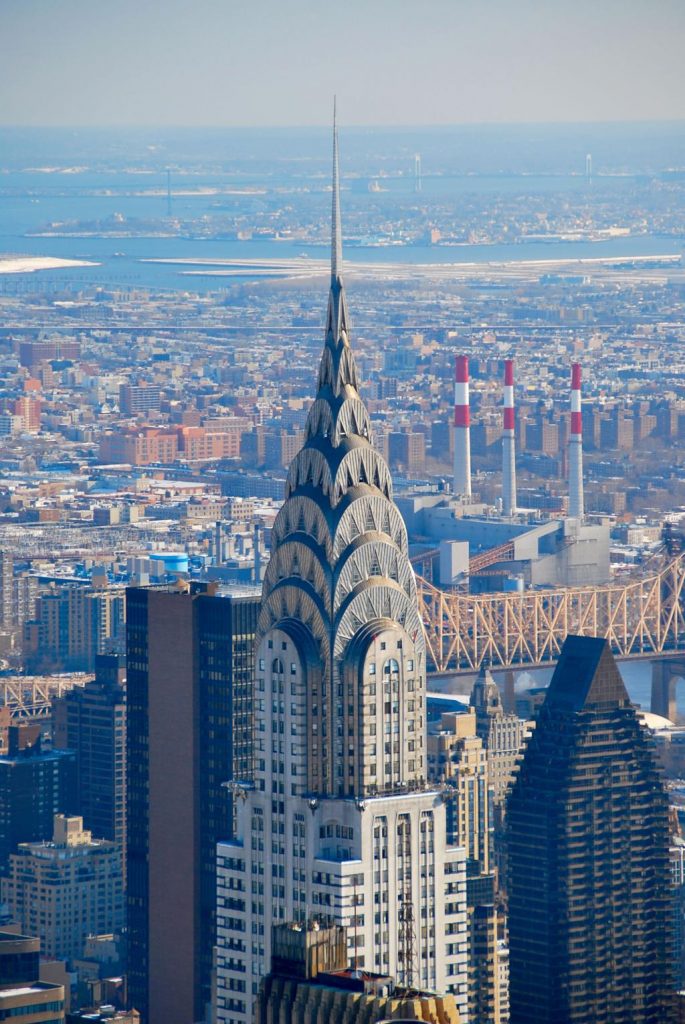
Architect William Van Alen secretly designed a 38-meter steel spire for the Chrysler Building. Hidden inside the tower during construction, the spire was assembled in sections and then hoisted into place in October 1929.
Overnight, the Chrysler Building surpassed 40 Wall Street and claimed the title of world’s tallest building at 319 meters.
The move stunned competitors and captivated the public.
Importantly, the spire served little functional purpose. It existed primarily to increase the building’s official height and secure the record.
The Chrysler Building became one of the earliest and most famous examples of vanity height.
Although its reign as the world’s tallest building lasted less than a year before the Empire State Building overtook it, the Chrysler Building established a precedent that still shapes skyscraper design today.
What Is Vanity Height?
The term “vanity height” refers to the difference between a skyscraper’s highest occupiable floor and its official architectural top.
In simpler terms, it measures how much of a building’s height is unusable space added primarily for visual impact or record-breaking purposes.
This can include:
- Decorative spires
- Architectural crowns
- Hollow upper sections
- Unusable mechanical levels
- Symbolic pinnacles
Vanity height became increasingly controversial as skyscrapers grew taller and global competition intensified.
According to the Council on Tall Buildings and Urban Habitat (CTBUH), the internationally recognized authority on skyscraper rankings, buildings are officially measured to their “architectural top.”
This means permanent architectural elements count toward a building’s height, while functional additions like antennas generally do not.
This distinction has sparked decades of debate.
Critics argue that decorative spires artificially inflate building heights and distort rankings. Supporters counter that architectural expression has always been part of skyscraper design and should be recognized.
The issue became globally famous in 1998.
The Petronas Towers vs. the Sears Tower
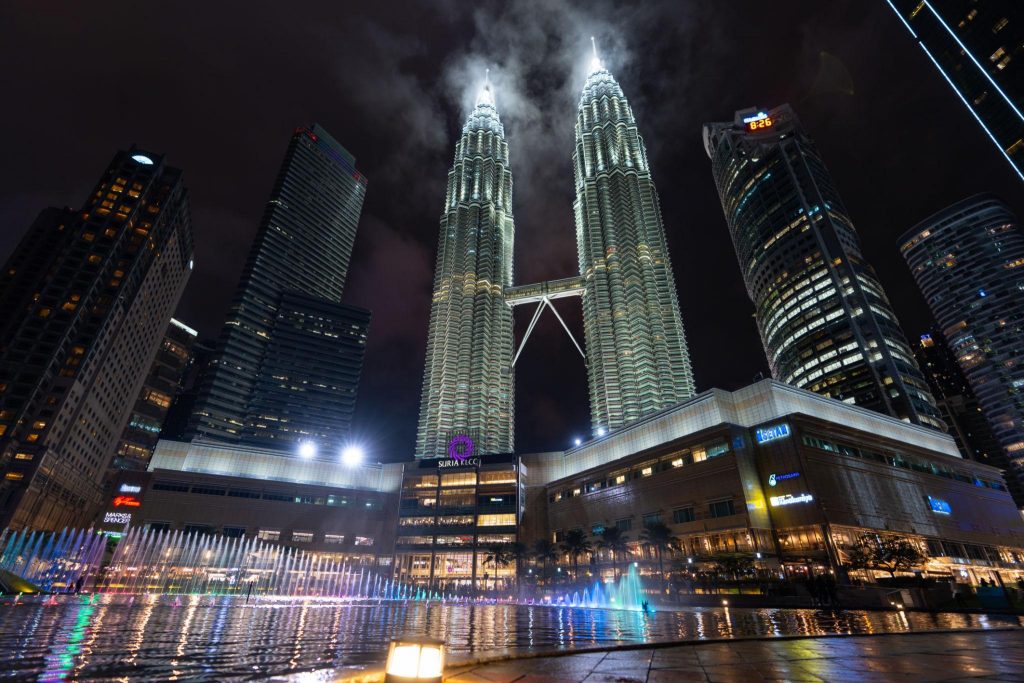
One of the greatest skyscraper controversies erupted when Malaysia’s Petronas Towers surpassed Chicago’s Sears Tower—now known as Willis Tower—as the tallest buildings in the world.
At first glance, many observers believed the decision made no sense.
The roof of the Sears Tower stood significantly higher than the roof of the Petronas Towers. Its antenna masts also extended much farther into the sky.
Chicagoans were furious.
How could Kuala Lumpur claim the title when the Sears Tower clearly appeared taller?
The answer lay in CTBUH rules.
The Petronas Towers featured permanent architectural spires integrated into the original design. The Sears Tower’s antennas, however, were classified as functional equipment rather than architectural features.
As a result, the Petronas Towers officially measured 451.9 meters, surpassing the Sears Tower’s 442.1-meter architectural height.
The decision triggered international debate and transformed public awareness of vanity height.
In response to criticism, the CTBUH later introduced multiple height categories:
- Height to architectural top
- Height to highest occupied floor
- Height to tip
These categories attempted to address disagreements while preserving the importance of architectural design.
Instead, they exposed how complicated skyscraper measurement had become.
Dubai and the Rise of Extreme Vanity Height
No city embodies the modern era of vanity height more than Dubai.
During the late twentieth and early twenty-first centuries, Dubai underwent one of the most aggressive urban transformations in modern history. Fueled by oil wealth, tourism ambitions, and international investment, the city reinvented itself as a global symbol of luxury and futuristic development.
Skyscrapers became central to that vision.
Unlike Manhattan or Hong Kong, Dubai did not face severe land shortages. Its skyscraper boom was not driven primarily by density or necessity.
Instead, towers became tools of branding and international visibility.
Height itself became a marketing strategy.
This environment encouraged increasingly dramatic uses of vanity height.
Studies have shown that Dubai possesses one of the world’s “vainest” skylines, with many towers dedicating enormous portions of their height to non-occupiable architectural elements.
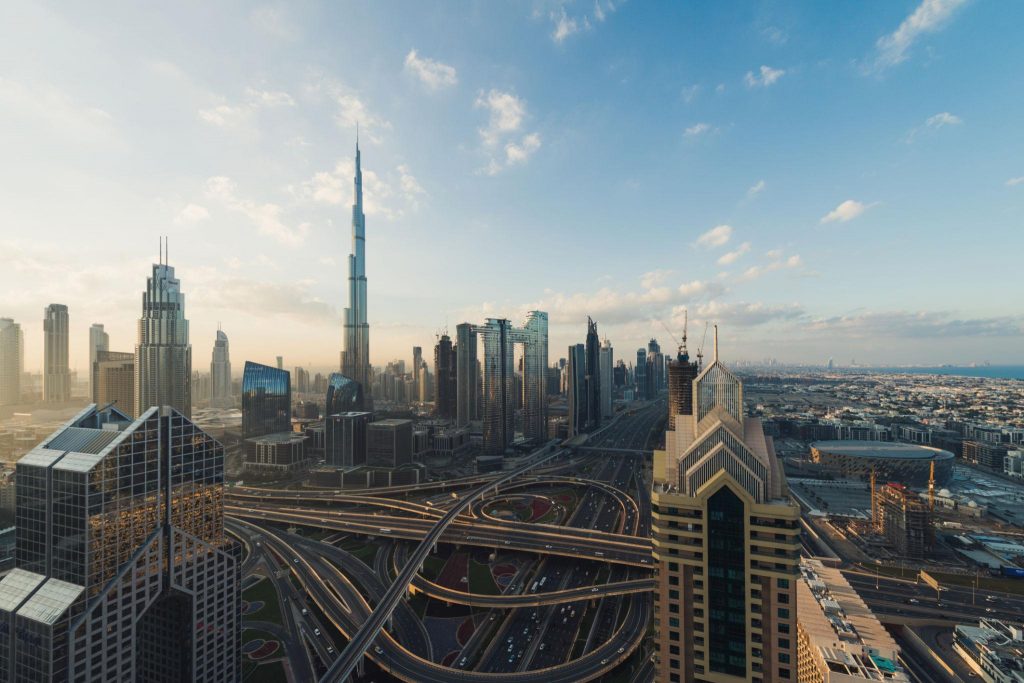
The ultimate example is the Burj Khalifa.
Burj Khalifa: Engineering Marvel or Monumental Symbol?
Completed in 2010, the Burj Khalifa stands at 828 meters and remains the tallest structure ever built.
Designed by Adrian Smith of Skidmore, Owings & Merrill, the tower transformed Dubai’s global image and became one of the most recognizable buildings on Earth.
Its engineering achievements are extraordinary.
The building required groundbreaking innovations in structural design, concrete pumping, wind engineering, and vertical transportation systems. It redefined what was technically possible in skyscraper construction.
Yet the Burj Khalifa also exemplifies the controversy surrounding vanity height.
The tower’s highest occupied floor sits far below its architectural pinnacle. Roughly 240 meters of its height consist of largely unoccupiable upper sections and spire elements.
That vanity height alone would qualify as a major skyscraper in many cities.
Critics argue that the building’s enormous spire exists primarily to secure height records. Defenders counter that the tapering form is essential to the tower’s architectural identity and structural performance.
Both perspectives contain truth.
The Burj Khalifa was never intended solely as practical real estate. It was designed as a global icon—a symbol of Dubai’s ambitions and capabilities.
Its true function extends beyond occupancy.
It operates as national branding on a colossal scale.
The Economics of Tallness
Why do developers pursue extreme height even when upper floors become inefficient or unusable?
The answer lies partly in economics and partly in psychology.
Tall buildings generate prestige.
Prestige attracts tenants, tourists, investors, media attention, and global recognition. A record-breaking tower can redefine a city’s international profile almost overnight.
The value of that visibility can exceed the economic inefficiencies of constructing unusable upper sections.
This phenomenon is especially important in emerging global cities seeking international influence.
Skyscrapers often function as declarations of arrival.
Cities such as Dubai, Kuala Lumpur, Shanghai, Shenzhen, and Riyadh have used supertall towers to project modernity and economic power.
The tallest building in the world becomes a form of soft power.
It communicates ambition, wealth, technological sophistication, and geopolitical relevance.
In this context, vanity height is not wasteful from the developer’s perspective—it is strategic.
The upper spire may generate little direct revenue, but the global publicity generated by the title of “world’s tallest” can produce enormous indirect value.
Merdeka 118 and the Modern Height Debate
Malaysia’s Merdeka 118 represents one of the clearest examples of contemporary vanity height.
Completed in Kuala Lumpur, the tower officially rises to 678.9 meters, making it the second-tallest building in the world after the Burj Khalifa.
However, much of that height comes from its towering spire.
The building’s highest occupied floor is substantially lower than its architectural pinnacle. Critics argue that its ranking exaggerates its practical scale compared to buildings like Shanghai Tower, which possesses higher occupied spaces.
Yet supporters emphasize the tower’s cultural symbolism.
Its design references the gesture made by Malaysia’s first prime minister during the nation’s declaration of independence. The spire is intended to symbolize national identity and historical memory rather than merely inflate height statistics.
This reveals an important truth about vanity height: it is not always purely vanity.
Architectural elements often carry symbolic meaning tied to culture, politics, or history.
The controversy lies in determining where symbolism ends and competitive exaggeration begins.
Shanghai Tower and Functional Height
Shanghai Tower offers an alternative philosophy of skyscraper design.
Completed in 2015, the tower rises 632 meters and serves as China’s tallest building.
Unlike many vanity-heavy skyscrapers, Shanghai Tower emphasizes functional occupancy and sustainability. Its twisting form reduces wind loads, while its double-skin façade improves energy efficiency.
The tower contains some of the world’s highest occupied spaces, including restaurants and observation areas located higher than comparable spaces in some officially taller buildings.
This has led critics of vanity height to argue that Shanghai Tower feels “taller” in practical terms than certain higher-ranked structures.
The comparison highlights two fundamentally different approaches to tall building design:
- Symbolic height focused on rankings and identity
- Functional height focused on occupancy and efficiency
Modern skyscraper competition increasingly balances these priorities.
The Role of the CTBUH
The Council on Tall Buildings and Urban Habitat plays a central role in skyscraper rankings.
Founded in 1969, the CTBUH developed international standards for measuring buildings and classifying height categories.
Its definitions shape global perceptions of what counts as the “tallest” building.
The organization distinguishes between several measurement methods:
Height to Architectural Top
This is the primary category used for official rankings. Permanent architectural elements such as spires count toward height.
Height to Highest Occupied Floor
This measures the highest floor intended for regular human use.
Height to Tip
This includes antennas, flagpoles, and other extensions regardless of architectural intent.
The CTBUH also requires that at least 50 percent of a structure’s height contain occupiable floors for it to qualify as a building rather than a tower.
This rule prevents purely symbolic structures from entering skyscraper rankings.
Nevertheless, debates continue over whether these standards adequately reflect public perceptions of height.
Vanity Height and National Identity
Modern skyscrapers increasingly function as national symbols rather than simple commercial developments.
Countries use tall buildings to signal modernization, economic strength, and international relevance.
This is especially true in regions undergoing rapid transformation.
The Burj Khalifa helped redefine Dubai’s global image. The Petronas Towers became icons of Malaysian modernization. Shanghai Tower reflected China’s rise as a technological and economic superpower.
Even proposed megaprojects like Saudi Arabia’s Jeddah Tower and The Line are deeply tied to national branding initiatives.
In these contexts, height becomes political.
The pursuit of records reflects competition not only between developers but between nations.
Vanity height thus becomes part of geopolitical storytelling.
A spire may represent far more than architectural decoration—it can symbolize ambition, sovereignty, or global aspiration.
Jeddah Tower and the Future of Height
Saudi Arabia’s Jeddah Tower aims to become the first building to exceed one kilometer in height.
Originally envisioned as a mile-high structure, the project was eventually scaled back due to engineering and economic challenges.
Even at one kilometer, however, the tower remains one of the most ambitious construction projects ever attempted.
Like many modern supertalls, Jeddah Tower includes substantial vanity height.
Its upper sections contain limited occupiable space, while its enormous spire contributes heavily to its final height.
Supporters argue that the project represents technological ambition and national transformation under Saudi Arabia’s modernization initiatives.
Critics question whether such extreme verticality remains economically or environmentally sensible.
The debate surrounding Jeddah Tower reflects broader questions about the future of skyscrapers in the twenty-first century.
Sustainability and the Critique of Vanity Height
As climate concerns intensify, critics increasingly challenge the environmental logic of supertall buildings with large unusable sections.
Constructing hundreds of meters of non-occupiable space requires enormous quantities of steel, concrete, glass, and energy.
Environmental critics argue that vanity height can represent wasteful resource consumption at a time when sustainable development is urgently needed.
Supertall skyscrapers already possess significant carbon footprints due to:
- High material requirements
- Complex structural systems
- Intensive energy consumption
- Vertical transportation demands
- Mechanical cooling systems
Adding large non-functional spires raises ethical and environmental concerns.
Some architects now advocate for a shift away from pure height competition toward sustainability-focused urban design.
This includes:
- Carbon-efficient structures
- Adaptive reuse
- Mixed-use density
- Transit-oriented development
- Human-centered urban planning
The question increasingly becomes whether future skyscrapers should prioritize symbolic height or environmental responsibility.
Why Humans Still Love Tall Buildings
Despite criticism, humanity remains captivated by skyscrapers.
Tall buildings inspire awe in ways few structures can match.
They represent optimism, engineering mastery, ambition, and imagination.
Observation decks attract millions of visitors annually because height changes perception. Looking down from hundreds of meters above ground produces a psychological experience tied to power, freedom, and transcendence.
Cities themselves use skylines to define identity.
New York, Hong Kong, Shanghai, Dubai, and Kuala Lumpur are instantly recognizable because of their towers.
Even critics of vanity height often admire the beauty and drama of these structures.
The emotional appeal of skyscrapers remains deeply embedded in modern culture.
Architecture as Storytelling
One reason vanity height persists is that architecture is not purely utilitarian.
Buildings communicate ideas.
A cathedral’s spire was never necessary for practical function, yet it carried immense symbolic power. Likewise, modern skyscraper crowns and pinnacles often serve narrative purposes.
Architects frequently argue that reducing buildings to occupiable floor area misunderstands architecture itself.
A skyline is partly functional and partly artistic.
The challenge lies in balancing artistic expression with honesty, sustainability, and practical value.
When does symbolic architecture become excessive spectacle?
There is no universal answer.
The Future of the Tallest Buildings
The era of endless vertical competition may be approaching a turning point.
Several forces are reshaping skyscraper development:
Sustainability Pressures
Environmental concerns are pushing developers toward efficiency and carbon reduction.
Hybrid Work Trends
Remote work and changing office demand are challenging traditional commercial tower economics.
Urban Livability
Cities increasingly prioritize walkability, public transit, and human-scale design.
Economic Risk
Megatall projects involve enormous financial uncertainty and long construction timelines.
Yet the desire for iconic towers remains powerful.
Countries and cities still view skyline-defining buildings as tools of prestige and tourism.
The future may involve fewer purely height-driven projects and more emphasis on sustainability, mixed-use integration, and architectural innovation.
But the race upward is unlikely to disappear entirely.
Humanity’s fascination with height is ancient and enduring.
Conclusion
The world’s tallest skyscrapers are more complicated than they appear.
Behind their glittering façades lies a fascinating intersection of engineering, economics, politics, symbolism, and spectacle.
Vanity height reveals that skyscrapers are not merely buildings—they are narratives about ambition and identity.
From the Chrysler Building’s secret spire to the Burj Khalifa’s monumental pinnacle, architects and developers have long manipulated height to achieve prestige and recognition.
Critics see this as artificial inflation. Supporters see it as architectural expression.
Both views capture part of the truth.
Skyscrapers have never been purely practical structures. They are monuments to human aspiration.
The debate over vanity height ultimately reflects a deeper question:
What do we want our tallest buildings to represent?
Efficiency? Symbolism? National pride? Engineering prowess? Artistic expression? Sustainability?
Modern skyscrapers embody all of these things simultaneously.
And as cities continue competing for attention in an increasingly globalized world, the battle for the sky is far from over
No responses yet