California’s High-Speed Rail (HSR) project is often described as one of the most ambitious infrastructure efforts in the United States — and nowhere is its progress more visible than in the Central Valley section. As of 2025, construction momentum is strong, major structures are rising, and the groundwork for future high-speed operations is taking shape. This article breaks down the current status, milestones, transformative potential, challenges, and the future direction of this historic project.
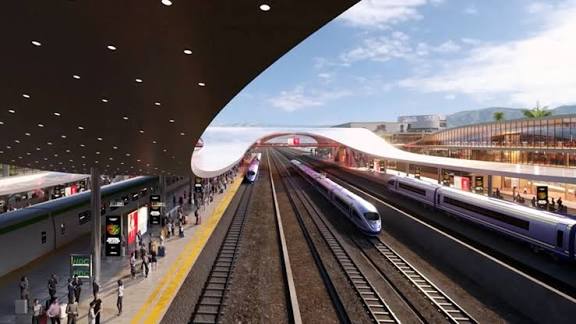
Current Status: What’s Been Built So Far
The active construction zone spans 119 miles from Merced to Bakersfield, forming the backbone of the Initial Operating Segment. Much of the heavy civil construction — including embankments, viaducts, underpasses, and grade separations — is already completed or nearing completion.
Dozens of structures now stand across the Central Valley, and trackbed preparation has advanced to the point where the next major phase — track and systems installation — is expected to begin soon. Logistics facilities and staging areas have also been completed to support the upcoming installation of electrified rail, signaling, and communication systems.
Major Milestones and Recent Construction Updates
Several key achievements define the current phase:
- Completion of numerous grade separations and bridges across Madera, Fresno, Kings, and Tulare counties
- Ongoing progress in utility relocation and land acquisition along the alignment
- Thousands of daily construction jobs, with more than 16,000 workers employed since groundbreaking
- Preparations underway for the installation of electrified high-speed track
These milestones mark a shift from foundational civil construction toward building an operational rail corridor.
Transforming Travel in California
The Central Valley section is expected to reshape mobility in California by:
- Slashing travel times between major city pairs, dramatically improving intercity mobility
- Reducing greenhouse-gas emissions through electric, high-speed, zero-emission transportation
- Boosting regional economies, particularly in the Central Valley, by increasing access to jobs and services
- Setting the stage for a statewide network connecting the Bay Area, Los Angeles, and beyond
High-speed rail could redefine how Californians move — making travel faster, cleaner, and more efficient.
Challenges, Delays & How the Project Is Responding
The project has not been without obstacles. Challenges include:
- Funding uncertainties and long-term financing needs
- Complex logistics associated with building a first-of-its-kind rail system in the U.S.
- The long timeline required to complete a multi-phase, statewide megaproject
- Questions about ridership and revenue for the initial Central Valley-only segment
In response, project leaders have pursued phased construction packages, improved procurement strategies, stronger project management practices, and potential partnerships to maintain momentum and control costs.
The Future: What Comes Next
Looking ahead, several key developments are on the horizon:
- Track installation and electrification systems construction
- Testing and commissioning of the Central Valley segment
- Expansion efforts toward the Bay Area and Southern California
- Continued exploration of funding strategies, including public-private partnerships
- Potential early service launching in the Central Valley once systems are complete
As these phases unfold, California’s high-speed rail will continue transitioning from concept to concrete reality — literally and figuratively.
The Central Valley stretch of California’s High-Speed Rail project represents real, measurable progress toward a modern transportation future. While challenges remain, the visible construction, completed structures, and upcoming systems installation show that the project is evolving from vision to infrastructure.
If fully realized, California’s high-speed rail could become a transformative statewide corridor — revolutionizing travel, supporting economic development, and serving as a model for future high-speed rail efforts across the United States.
No responses yet