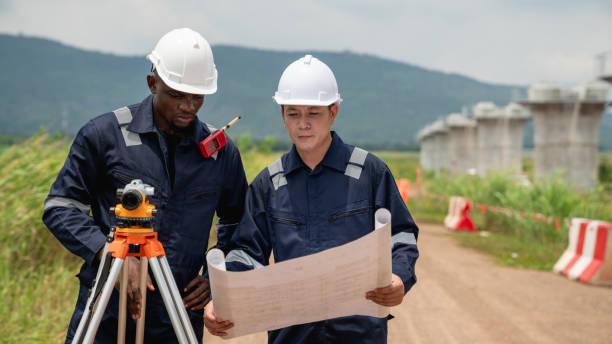
Civil engineering has long been associated with heavy machinery, manual labor, and physical construction materials such as steel, concrete, and asphalt. While these elements remain essential, the discipline has undergone a quiet but profound transformation over the past two decades. One of the major changes has been in Geographic Information Systems (GIS)—a digital technology that has fundamentally changed how infrastructure is planned, designed, delivered, and managed.
Once used primarily for mapping and basic urban planning, GIS has evolved into a key decision-making system for civil engineers. Today, it integrates spatial, environmental, structural, and regulatory data into a single intelligent framework. Spatial intelligence used within GIS allows engineers to visualize complex conditions, predict outcomes, reduce risks, and improve the long-term performance of infrastructure projects. As urbanization accelerates and climate risks increase, GIS has become indispensable to modern civil engineering practice.
Understanding GIS in Civil Engineering
At its core, GIS in civil engineering refers to the use of spatial data analysis and visualization tools to support infrastructure development throughout its lifecycle. It enables engineers to combine geographic data—such as terrain, soil properties, land use, climate patterns, and existing utilities—with engineering designs and operational data.
Intergration is important because it is allows for a data-rich environment where multiple stakeholders—engineers, planners, environmental specialists, policymakers, and asset managers—can collaborate using a common spatial reference. This results in better-informed decisions, improved design accuracy, and enhanced project efficiency from concept through operation.
Rather than working with isolated datasets or static drawings, GIS allows engineers to better understand how infrastructure interacts with its physical, environmental, and social context.
Why GIS Matters in Civil Engineering
Civil engineering projects are inherently complex and interdisciplinary. GIS helps address this complexity by offering several key advantages:
Visual Integration
GIS brings together diverse datasets into a single visual platform, allowing engineers to understand relationships between terrain, infrastructure, population, and environmental constraints.
Improved Accuracy
High-resolution spatial data, satellite imagery, and real-time information improve design precision and reduce uncertainty during planning and construction.
Greater Efficiency
By streamlining pre-construction analysis and eliminating data silos, GIS reduces delays, errors, and duplication of effort.
Cost Optimization
Early identification of risks—such as flood exposure, unstable soils, or regulatory conflicts—helps prevent costly redesigns and rework.
Regulatory Compliance
GIS supports environmental impact analysis and ensures projects align with zoning laws, environmental regulations, and safety standards.
These benefits make GIS a foundational technology for safer, more sustainable, and more resilient infrastructure development.
Key Applications of GIS in Civil Engineering
1. Site Selection and Land Use Planning
Selecting the right site is one of the most critical decisions in any civil engineering project. GIS enables engineers to evaluate land suitability by layering data such as elevation, soil conditions, flood risk, seismic activity, zoning regulations, and environmental sensitivity.
Through spatial analysis, project teams can compare multiple sites simultaneously, identify constraints early, and select locations that minimize risk while maximizing economic and functional value. This approach significantly improves investment decisions for roads, housing developments, industrial zones, and public facilities.
2. Transportation Network Design and Traffic Management
Transportation systems generate and depend on large volumes of spatial data. GIS supports the planning, design, and management of roads, railways, and transit systems by analyzing traffic patterns, accident hotspots, and population movement.
Engineers can model alternative road alignments, assess the impact of new infrastructure on surrounding communities, and optimize traffic flow during construction or emergencies. Over time, GIS helps authorities monitor road conditions, schedule maintenance, and extend the lifespan of transport assets.
3. Water Supply and Drainage System Design
Efficient water management is essential for both urban and rural environments. GIS plays a critical role in designing water supply networks, stormwater drainage systems, and flood control infrastructure.
Using hydrological modeling, engineers can map watersheds, predict runoff behavior, identify flood-prone areas, and size pipelines and retention systems accurately. In regions affected by seasonal flooding or extreme rainfall, GIS-based analysis significantly improves infrastructure resilience and public safety.
4. Utility Mapping and Subsurface Asset Management
Modern cities rely on complex underground networks, including water mains, sewer lines, gas pipelines, electrical cables, and fiber optics. Managing these assets without accurate spatial information is costly and dangerous.
GIS provides a centralized database for subsurface utility mapping, allowing engineers to locate assets before excavation, coordinate across utility agencies, and prevent service disruptions. This integrated approach reduces construction risks, improves safety, and supports long-term asset management.
5. Urban Infrastructure and Land Development
GIS is an essential tool for integrated urban development. It supports land-use planning, zoning enforcement, green space protection, and infrastructure expansion in rapidly growing cities.
Engineers and planners use GIS to identify suitable areas for high-density development, plan transport corridors, address urban heat islands, and ensure equitable access to public services such as schools, hospitals, and transit. By fostering collaboration across departments, GIS enables coordinated and sustainable urban growth.
6. Environmental Impact Assessment (EIA)
Environmental compliance is a mandatory component of major infrastructure projects. GIS enables engineers to assess, visualize, and mitigate environmental impacts effectively.
Applications include modeling air and noise pollution, mapping protected ecosystems, analyzing biodiversity risks, and estimating carbon emissions. These insights help projects meet regulatory requirements, secure approvals, and reduce long-term environmental harm.
7. Topographic and Terrain Analysis
Understanding terrain is fundamental to safe and efficient construction. GIS uses Digital Elevation Models (DEMs), slope analysis, and contour mapping to guide grading, foundation design, and drainage planning.
Engineers can optimize cut-and-fill operations, avoid landslide-prone slopes, and design foundations suited to site conditions. Detailed terrain analysis reduces engineering errors and enhances construction safety.
8. Pavement and Road Condition Monitoring
Maintaining road networks requires more than periodic visual inspections. GIS enables agencies to track pavement conditions spatially, monitor deterioration trends, and prioritize maintenance based on traffic volumes and risk levels.
Data-driven maintenance planning improves road safety, reduces lifecycle costs, and ensures efficient use of public funds.
9. Bridge and Tunnel Alignment Planning
Bridges and tunnels present unique engineering challenges due to geological, hydrological, and structural risks. GIS supports alignment optimization by analyzing terrain, subsurface conditions, aquifer depth, and seismic hazards.
By simulating stress scenarios and minimizing excavation in unstable zones, GIS improves safety and reduces construction complexity.
10. Construction Site Logistics and Planning
Construction sites are spatially constrained environments where efficient layout is critical. GIS helps plan access routes for equipment, material storage areas, crane locations, and safety zones.
This spatial optimization reduces delays, minimizes conflicts, improves worker safety, and enhances overall site productivity.
11. Disaster Risk Assessment and Emergency Response
Natural disasters pose significant threats to infrastructure and human safety. GIS enhances disaster preparedness by identifying hazard zones, modeling impacts, and mapping vulnerable populations.
During emergencies, GIS supports real-time response coordination, evacuation planning, and damage assessment. These capabilities are vital for strengthening infrastructure resilience and civil defense systems.
12. Lifecycle Management and Infrastructure Maintenance
Civil infrastructure requires long-term operational planning. GIS supports lifecycle management by linking spatial data with inspection records, performance metrics, and maintenance schedules.
Engineers can create digital twins of assets, forecast maintenance needs, track repairs geographically, and allocate budgets more effectively. This proactive approach extends asset life and reduces operational costs.
13. Soil and Subsurface Mapping
Geotechnical conditions determine foundation performance and structural stability. GIS-based soil mapping integrates soil classification, bearing capacity, groundwater data, and historical settlement records.
These insights help engineers select appropriate foundation solutions and reduce risks such as differential settlement or liquefaction.
14. Documentation, Reporting, and Regulatory Compliance
Modern engineering projects require transparent, spatially referenced documentation. GIS simplifies reporting by generating visual maps, maintaining inspection records, and supporting compliance audits.
This digital approach improves communication with stakeholders and ensures projects meet regulatory standards efficiently.
Building Smarter Infrastructure with GIS
From early-stage site analysis to long-term asset management, GIS has become a cornerstone of modern civil engineering. It enables data-driven decisions, reduces uncertainty, and supports infrastructure systems that are safer, more efficient, and more resilient.
As cities expand, climate risks intensify, and infrastructure demands grow, the role of GIS will only become more critical. Civil engineering is no longer just about building structures—it is about understanding space, context, and systems. GIS provides the intelligence needed to meet these challenges and shape the future of sustainable infrastructure.
No responses yet