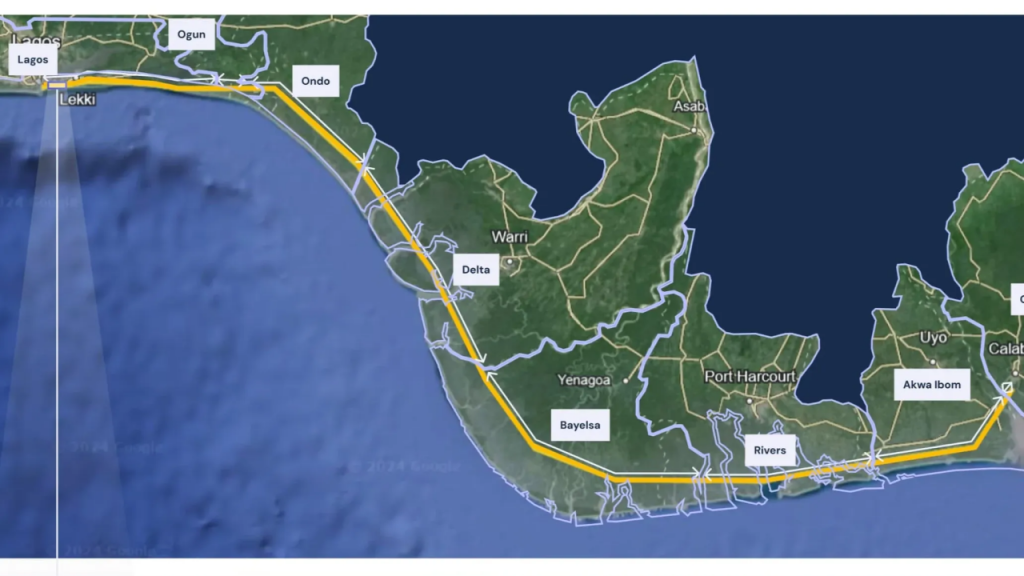
- The route between Lagos (south-west Nigeria) and Calabar (south-east, near the coast) covers a large swath of the country — spanning hundreds of kilometers, crossing diverse regions and constituting a strategic east–west (or south-south) corridor.
- Nigeria already relies heavily on road transport, and major highways (or planned highways) attempt to connect different regions. For long-distance connectivity of this scale, rail can potentially offer safer, more reliable, and higher-capacity transport than roads — especially for cargo, bulk freight, or intercity passenger services.
- Given Nigeria’s population, urban growth, and increasing pressure on road infrastructure (traffic, accidents, delays), a modern rail corridor connecting Lagos to Calabar (or linking major nodes along that corridor) has often been discussed in public debate, academic circles, and among infrastructure planners as a desirable long-term goal.
Thus, the notion of a Lagos–Calabar rail line often arises in connection with broader national ambitions for rail modernization, inter-regional integration, and easing transport bottlenecks across Nigeria.
What is Known / What Has Been Proposed for Rail in Nigeria (Generally)
While there is no firm, publicly confirmed Lagos–Calabar rail project today, Nigeria has in recent years undertaken or proposed several rail-infrastructure developments, including:
- Construction and upgrading of standard-gauge rail lines (around Lagos and to other states) aiming to modernize rail transport.
- Plans for inter-regional rail links as part of long-term national transport strategies, to reduce dependency on road transport and facilitate cargo and passenger movement across states.
- Recognition by infrastructure planners and policymakers that rail — if properly developed — can help address chronic problems of traffic congestion, road maintenance costs, safety, and inefficiency associated with heavy truck traffic on long-distance highways.
In short: Nigeria’s political authorities and transport planners know that rail expansion is part of medium- to long-term national infrastructure goals. However, detailed, concrete plans for a continuous Lagos–Calabar rail link remain elusive in public documentation.
Why a Lagos–Calabar Rail (Parallel to Highway) Is Not Confirmed — Key Gaps & Challenges
As of the most recently available information, a fully formulated Lagos–Calabar rail project (especially one that runs parallel to a highway linking Lagos and Calabar) faces multiple obstacles, which explain why it remains speculative rather than under construction.
• Lack of Official Documentation / Public Project Files
Searches of official transport-ministry releases, national infrastructure plans, and major Nigerian media show no detailed project profile, environmental impact statement, tendering, or funding package explicitly labeled “Lagos–Calabar Rail.” Without those, the project remains at best a concept.
• Enormous Scale & Cost
A rail corridor covering the full Lagos-to-Calabar distance would span many hundreds of kilometers, cross multiple states with varying terrain, and require massive investment — in track, signaling, rolling stock, stations, maintenance depots, possibly electrification or diesel-powered systems. For a developing economy such as Nigeria’s, mobilizing such capital (public or private) presents substantial fiscal and logistical challenges.
• Coordination Across States, Regulatory & Administrative Complexity
Because the route would cut across many different states, federal and state governments would need to coordinate: land acquisition (right-of-way), environment permits, compensation for affected communities, safety standards, and long-term maintenance agreements. This adds layers of regulatory and political complexity.
• Uncertain Demand & Risk of Underutilization
For rail investment to pay off, there must be consistent demand — cargo freight (bulk goods, container traffic), long-distance passengers, industrial supply chains. If demand is uncertain or fragmented, returns on investment may be poor, discouraging investors or government backing.
• Competing Transport Priorities (Roads, Short-Distance Rail, Urban Transport)
Nigeria also has many pressing transport needs: urban commuter rail, inter-city simpler lines, road maintenance. Given limited resources, large-scale corridors like Lagos–Calabar may compete with more locally urgent projects. As a result, mega-projects may be sidelined in favor of smaller, higher-impact interventions.
Thus, while a Lagos–Calabar rail corridor remains an appealing idea, substantial structural, economic, political, and logistical hurdles explain why it has not yet materialized.
What Some Public Discourse Mentions — Rail-Along-Highway as a Vision
In media reports, opinion pieces, and infrastructure analyses, some commentators mention the concept of building a rail line “parallel” to major highways — and often associate that with the Lagos–Calabar corridor. The logic is:
- Use existing or planned highway rights-of-way (or corridor alignment) to minimize land-acquisition costs.
- Create a multi-modal transport corridor: roadway + railway + logistics nodes.
- Provide alternatives to heavy truck traffic on highways — shifting freight and long-distance travel to rail, improving safety, reducing road wear, reducing travel times.
- Unlock economic opportunities in regions along the corridor: industrial growth, freight hubs, urban connectivity, access to ports or terminals.
However, the majority of such mentions remain speculative, optimistic, or rhetorical — not backed by formal engineering studies, publicly released designs, or government tenders. In other words: the concept is discussed, but not yet acted upon.
What to Watch — What Would Need to Happen for Lagos–Calabar Rail to Become Real
Here are the main prerequisites and implementation steps that would be required to turn the Lagos–Calabar Rail (parallel-to-highway) concept into reality:
- Feasibility Study & Demand Forecast
A thorough feasibility study — assessing passenger and freight demand, projected growth, cost-benefit analysis, route options, land rights, environmental impact, and risk — would be first step. - Route Definition & Rights-of-Way Acquisition
Define a clear route: whether parallel to an existing or planned highway, or independent; secure land title, acquire or compensate landowners; ensure minimal displacement or social disruption. - Funding / Financing Mechanism
Identify funding: public budget allocations, development bank loans, private-public partnership (PPP), or foreign investment. Given cost scale, likely a mix. - Design, Engineering & Construction Planning
Engineering design (trackbed, bridges, tunnels if needed, drainage, civil works), signal and communications systems, stations, depots, maintenance yards. - Governance and Institutional Framework
Define project governance: which agency leads (federal or state), regulatory oversight, operations, maintenance, safety, tariff/fee structure, and long-term sustainability policies. - Integration with Existing Transport Network
Plan how the rail will interface with existing roads, local rail, ports, freight terminals, urban centers — to maximize utility beyond just an intercity link. - Public and Stakeholder Engagement
Engage communities along the route; assess social and environmental impacts; mitigate risks (displacement, ecosystem disruption, social disruption). - Phased Implementation with Pilot Segments
Given scale, realistic approach would begin with pilot segments — perhaps linking major intermediate cities rather than full Lagos→Calabar at first — then gradually extend.
If these steps were taken, and if political will and financing aligned, a Lagos–Calabar rail corridor could become feasible — but as of now, the project remains in concept/idea stage.
Conclusion: A Vision — But Not Yet a Project
As of now, there is no publicly available, concrete plan or active project for a Lagos–Calabar rail line running parallel to a highway. The idea remains mostly in the realm of policy discussion, academic and media speculation, or long-term national ambitions for rail expansion.
That said, the strategic rationale — huge distances, heavy road traffic, demand for safe long-distance transport, potential cargo and freight flows — makes the concept attractive. For Nigeria, a well-designed rail corridor across the southern belt could deliver long-term gains in connectivity, economic integration, and mobility.
For now, the Lagos–Calabar Rail remains a possible future infrastructure vision, not yet a confirmed undertaking. Should credible feasibility studies, government announcements, or financing plans emerge, the corridor could evolve — but the path ahead is long.
No responses yet