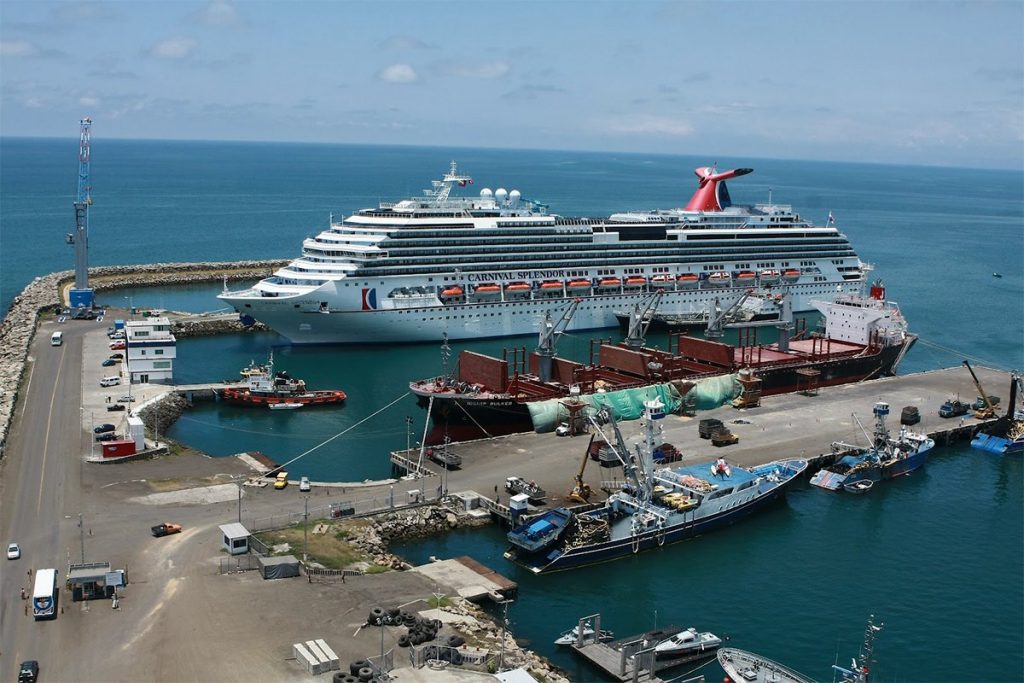
The Port of Manta is one of Ecuador’s main deep-water ports, located on the Pacific coast in the province of Manabí. Given growing demand for maritime freight (containerized cargo, general cargo, possibly trans-Pacific trade), the port has been under planning and investment to expand its capacity — especially by adding new berths (for ships), enlarging and modernizing yard/terminal areas, improving port infrastructure (quays, docks), and enhancing handling, storage and logistics capacity.
The expansion aims to:
- Accommodate larger, modern container and cargo ships (requiring deeper berths and longer quay).
- Increase throughput: more cargo volume, containers and general cargo handled per year.
- Improve efficiency: better yard layout, improved storage/stacking, more space for loading/unloading, smoother logistics.
- Support Ecuador’s international trade competitiveness, especially exports/imports from the Pacific via Manta (rather than relying solely on other ports).
- Enable potential future growth: container traffic growth, trans-oceanic routes, increased import/export flows.
Because the port sits on the Pacific — and Ecuador lies strategically on maritime routes — the expansion is significant not just for Manabí province or Ecuador, but for regional (Pacific-Latin America) shipping networks.
What the Expansion Involves: Berths, Yards, and Infrastructure
Based on publicly available project descriptions and port-development plans, these are the main components expected (or reported) in the expansion of the Port of Manta:
1. Additional and Upgraded Berths / Quay / Dock Facilities
- The expansion includes construction of new berths/quays to allow more ships to dock simultaneously. By adding berths, the port increases capacity to receive several ships (container, bulk, general cargo) at once.
- Berths are designed to accommodate larger vessels than previously possible: bigger container ships or cargo vessels with deeper drafts. This requires dredging, reinforced quay walls, and updated mooring infrastructure.
- Upgrading existing berths — reinforcing docks, improving loading/unloading infrastructure (cranes, gantries, container handling gear), to meet modern standards for container and cargo operations.
2. Expansion and Modernization of Yard / Terminal Areas
- Enlarged storage yards for containers, bulk cargo, and general cargo. This involves expanding the land area dedicated to stacking containers, staging cargo, storing goods, and maneuvering trucks/trailers.
- Improved terminal layout: optimized spacing for containers, easier access for loading/unloading, better traffic flow within port, clear segregation of cargo types (containers, bulk, general).
- Upgraded infrastructure support: better paved surfaces, drainage, lighting, security, gates and access control, possibly cold-chain storage or warehouses depending on cargo types.
3. Supporting Infrastructure: Access, Connectivity, Dredging, Utilities
- Potential dredging of port approaches or harbor basin to ensure sufficient water depth and safe navigation for larger vessels (this is often a necessary precondition when new berths are built).
- Improved transport connectivity: enhanced road access to handle increased truck traffic in and out of the port, better rail or road-logistics integration (if applicable), access to hinterland cargo flows.
- Updated port utilities and handling systems: cargo cranes, container gantries, bulk-cargo handling equipment, safety and environmental systems, customs and inspection zones.
4. Modernization to International Port Standards
- Implementation of modern container-port practices: container stacking, container management systems, yard-management software, global-standard handling procedures.
- Compliance with environmental, safety, and operational regulations — ensuring efficiency, security, and reliability.
Strategic & Economic Significance of the Expansion
The expansion of the Port of Manta carries far-reaching benefits, both for Ecuador and more broadly for regional maritime trade and logistics:
- Improved competitiveness: A modern, high-capacity port allows Ecuador to compete more effectively in global trade, reduce shipping bottlenecks, and offer efficient export/import services.
- Support for exports/imports: Useful for agricultural exports, manufactured goods, imports of raw materials — improving supply chains and lowering costs for businesses.
- Growth potential for container traffic: As containerization grows globally (and in Latin America), Manta could become a key transshipment or distribution hub on the Pacific coast.
- Regional connectivity: Could foster trade links between Ecuador and Asia, North America, and the Pacific Rim, relying on Manta as a modern port facility.
- Local economic development: Creation of jobs (port operations, logistics, warehousing), stimulation of related industries (transport, trucking, trade services), and growth of the Manabí region around the port.
- Infrastructure resilience and modernization: By upgrading port infrastructure, the expansion helps future-proof Ecuador’s maritime infrastructure against rising global trade demands.
Challenges, Risks, and Considerations
As with any major port expansion, there are challenges and risks to watch:
- Environmental impact: Building new berths, dredging harbor basins, expanding yards — all could impact marine ecosystems, local coastal ecology, water quality, and require careful environmental management. Without transparent environmental assessments and mitigation, the expansion could harm local habitats.
- Investment costs and financing: Port expansions are capital-intensive. Securing sufficient investment — from public funds, private partners, or foreign investors — while ensuring sustainable returns is a challenge.
- Demand risk: The expansion assumes growth in maritime traffic and trade. If demand growth slows (global trade fluctuations, economic downturns, competition from other ports), capacity may be underused.
- Operational and logistical complexity: Upgrading port infrastructure, hiring and training staff, integrating new equipment, implementing modern port-management practices — all require effective management, skilled labor, and institutional capacity.
- Connectivity and hinterland integration: For the port to realize its potential, hinterland logistics (roads, rail, warehouses, distribution centers) must also be developed. If inland transport links are weak, port capacity alone may not deliver full benefits.
- Regulatory, customs & governance issues: Effective customs procedures, secure cargo handling, transparent governance are needed — otherwise bottlenecks at customs or shipping may blunt the gains from physical port expansion.
What Is Known — and What Remains Unclear
Based on publicly accessible reporting and planning documents (as of recent years):
✔ Known
- There is a recognized plan to expand the Port of Manta’s berths and terminal areas to boost capacity and handle larger cargo and container traffic.
- The expansion covers more than just a single berth: it includes yard expansion, quay works, and modern port-infrastructure upgrades.
- The motivation is tied to increasing Ecuador’s maritime trade capacity and improving competitiveness on the Pacific coast.
⚠ Unclear / Not Publicly Detailed
- Exact number of new berths or total quay length after expansion — public sources don’t seem to offer precise figures.
- Deepening (dredging) plans and the expected maximum vessel size post-expansion are not consistently published.
- Timeline for completion: there is no widely available, up-to-date scheduled finish date that is publicly confirmed.
- Detailed cost estimates / financing breakdown (public vs private investment) are hard to find in open sources.
- Full scope of supporting infrastructure (warehouses, hinterland logistics, customs facilities) remains partially unspecified in public reporting.
Why Port of Manta Expansion Matters for Ecuador and the Pacific Region
The expansion of Port of Manta represents more than a local port upgrade — it can significantly shift Ecuador’s role in Pacific-region trade. A modern, high-capacity port on Ecuador’s coast opens many strategic opportunities:
- Serving as a logistics gateway for Ecuador’s exports (agricultural, fishery, manufactured goods) to Asia, North America, and other Pacific markets.
- Offering an alternative to larger, congested ports — easing trade bottlenecks for national and regional exporters/importers.
- Encouraging development of logistics corridors — combining port, road, warehousing, and distribution centers — which can catalyze regional economic growth.
- Strengthening trade resilience: with modern port infrastructure, Ecuador can better respond to shifts in global trade dynamics, shipping demand, and supply-chain disruptions.
- Supporting regional integration — by serving as a node in a broader network of Pacific-coast ports, facilitating not just national but inter-country maritime trade across Latin America and beyond.
In short: the port expansion is potentially transformative, making Manta a strategic maritime hub rather than a modest regional port.
Conclusion — A Port Expansion with Big Promise, and Significant Challenges
The expansion of the Port of Manta — involving additional berths, expanded yards, modern quay infrastructure, and supporting logistics facilities — represents a major investment in Ecuador’s maritime future. If executed carefully and complemented by strong hinterland logistics and governance, the project could:
- Dramatically increase cargo capacity
- Improve Ecuador’s competitiveness in international trade
- Stimulate regional economic development
- Position Manta as a modern, high-capacity Pacific port hub
However, realizing those gains will depend on overcoming substantial challenges: environmental protection, financing, demand risk, logistics integration, and institutional capacity. Transparent public-private collaboration, careful planning, and long-term commitment to maintenance and governance will be key to ensuring that the expansion fulfills its potential.
No responses yet