What if a single 18-kilometre tunnel could remove one of Europe’s biggest transportation bottlenecks, cut international train journeys by around two hours, and reshape the movement of freight between Scandinavia and continental Europe?
That is the ambition behind the Fehmarnbelt Tunnel.
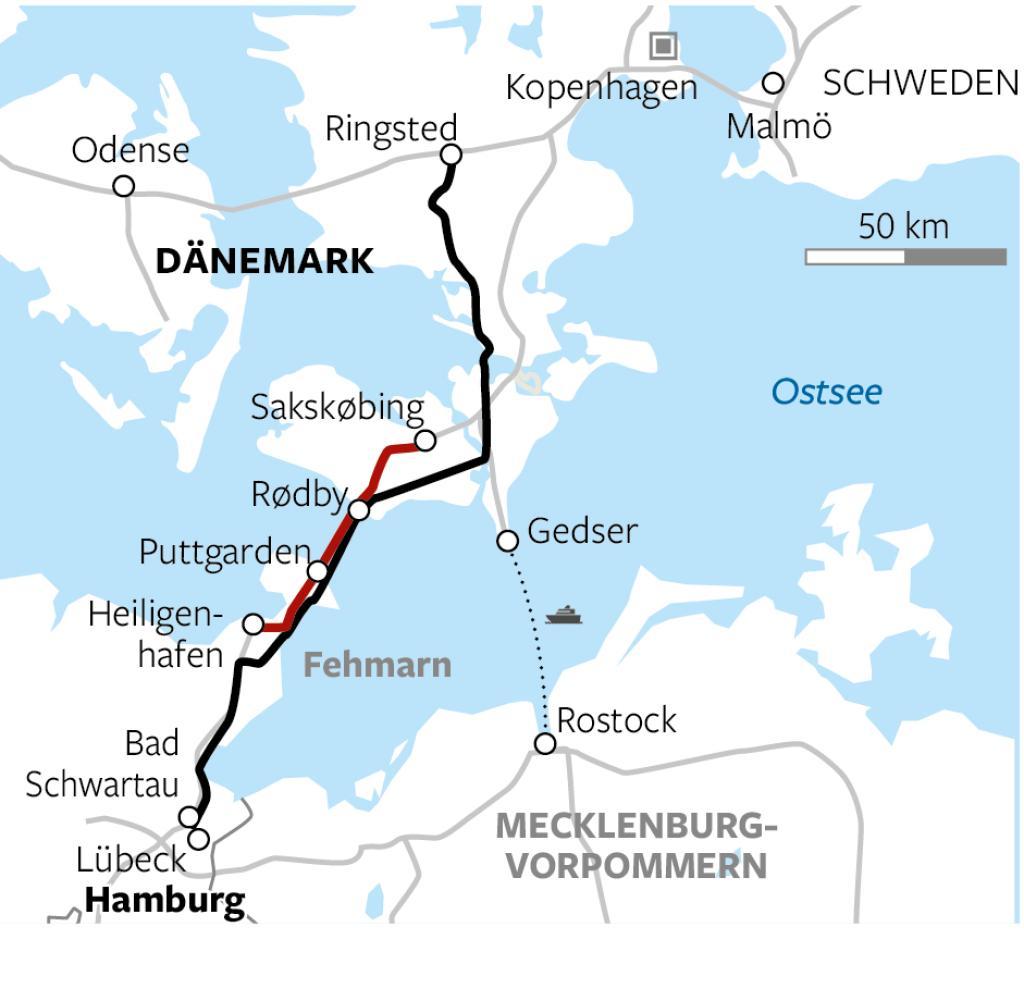
Being constructed beneath the Baltic Sea between Denmark and Germany, this extraordinary infrastructure project is intended to create a permanent road and railway connection between the Danish island of Lolland and the German island of Fehmarn.
When completed, it will become the world’s longest immersed road and rail tunnel.
Most people are fascinated by its unusual construction method.
Engineers are manufacturing enormous concrete tunnel sections on land, floating them into the Baltic Sea, and lowering them into a prepared trench on the seabed.
But the engineering story does not end with construction.
The tunnel is part of a much larger transformation of Europe’s transportation network.
It is designed to make international rail travel faster, provide a more direct route for freight trains, improve cross-border connectivity, and strengthen one of the European Union’s most important transportation corridors.
However, the benefits will not appear automatically when the concrete tunnel is finished.
Railway upgrades, signalling systems, electrification, and international coordination are all essential.
So how could the Fehmarnbelt Tunnel transform European rail transport, and what challenges must engineers overcome before its full potential can be realized?
1. Understanding Europe’s Missing Railway Connection
Europe has one of the world’s most extensive railway networks.
High-speed passenger trains connect major cities, while freight railways transport industrial materials, manufactured goods, agricultural products, and containers across national borders.
However, geographical barriers continue to create bottlenecks.
Seas, mountains, rivers, and areas with limited infrastructure can force trains to follow indirect routes.
The Fehmarnbelt is one example.
The narrow stretch of water separates Denmark and Germany and interrupts an otherwise direct transportation corridor.
Currently, passenger trains between Copenhagen and Hamburg generally travel west through Denmark before turning south toward Germany.
This route avoids the Fehmarnbelt crossing but adds considerable distance.
Rail freight travelling between Scandinavia and continental Europe faces a similar geographical challenge.
For many services, the established route passes through Denmark’s Jutland Peninsula and the Great Belt fixed link.
Although this route provides a permanent railway connection, it requires trains to travel considerably farther than the direct Fehmarnbelt alignment.
The new tunnel is intended to close that gap.
By connecting Lolland and Fehmarn, it will create a shorter, more direct railway route between Copenhagen and northern Germany.
For transportation engineers, this is known as removing a missing link in the network.
Its significance extends well beyond the tunnel’s physical length.
2. Why an 18-Kilometre Tunnel Can Save Hours of Travel
One of the most interesting aspects of transportation infrastructure is that a relatively short piece of new railway can produce much larger network-wide benefits.
The Fehmarnbelt Tunnel will be approximately 18 kilometres long.
Yet the planned reduction in travel distance for some international rail movements is around 160 kilometres.
How is that possible?
The answer is route geometry.
Existing trains must follow a longer path around the waterway.
The tunnel creates a direct connection across it.
This removes the need for a substantial detour.
Copenhagen to Hamburg: A dramatic improvement
Project planning documents have long presented a journey time of approximately two and a half hours between Copenhagen and Hamburg after the fixed link and its connecting railway improvements become operational.
This compares with historical travel times of approximately four and a half to five hours on the longer route.
The reduction would make train travel considerably more attractive for passengers travelling between the two cities.
For example, a journey that previously required much of a working day could become practical for shorter business trips.
It could also make rail travel more competitive with flying when airport access, security procedures, boarding, and onward transportation are considered.
However, the projected journey time is not guaranteed by the tunnel alone.
It depends on the completion of connecting infrastructure, suitable rolling stock, railway operations, and an effective timetable.
That distinction is essential when evaluating transportation megaprojects.
3. The Engineering Behind a Seven-Minute Underwater Train Journey
The Fehmarnbelt Tunnel is designed to carry two electrified railway tracks in separate tubes.
The planned operating speed through the tunnel is approximately 200 kilometres per hour.
At that speed, an 18-kilometre distance would take:
Time = Distance ÷ Speed
18 km ÷ 200 km/h = 0.09 hours
0.09 × 60 = 5.4 minutes
This is a simplified calculation assuming a constant speed of 200 km/h.
The officially quoted planned crossing time is approximately seven minutes, reflecting practical operating conditions.
Trains cannot always enter, travel through, and leave infrastructure at exactly the same maximum speed.
Operational speed profiles, acceleration, railway geometry, signalling, and other requirements affect actual journey times.
Why two railway tracks matter
A double-track railway generally allows trains to operate in both directions simultaneously.
This improves potential capacity compared with a single-track line, where trains may need to wait at passing locations.
However, the number of trains that can use a railway depends on more than its track count.
Engineers and operators must also consider signalling, train separation, junctions, speed differences, maintenance requirements, and connecting railway capacity.
For Fehmarnbelt, the tunnel provides a major new infrastructure component, but its usable capacity will depend on how the entire corridor functions.
4. Why Rail Freight Could Benefit Even More Than Passengers
Although shorter passenger journeys will attract public attention, rail freight may experience some of the most significant benefits.
Freight trains often travel long distances across multiple countries.
They may carry containers, industrial products, agricultural commodities, timber, vehicles, and other commercial goods.
For logistics companies, distance and travel time directly affect operating costs.
A shorter route means fewer resources
Reducing the route length can lower energy consumption, locomotive operating time, and staff requirements for individual journeys.
It may also improve the utilization of locomotives and wagons.
Consider a simplified example.
If a freight train can avoid 160 kilometres of travel and its average effective operating speed is 70 km/h, the theoretical distance-related time saving is:
160 ÷ 70 = 2.29 hours
That is approximately two hours and seventeen minutes.
Actual savings depend on timetables, network congestion, stopping patterns, border procedures, and other operating conditions.
Nevertheless, the example demonstrates why a new fixed link can be valuable even without increasing maximum train speed.
A shorter route reduces the amount of railway infrastructure that each train must travel over.
For businesses operating large volumes of freight, the accumulated benefits could be considerable.
5. Connecting Scandinavia With Continental Europe
The Fehmarnbelt Tunnel is part of a much larger European infrastructure strategy.
The European Union has developed the Trans-European Transport Network, commonly known as TEN-T.
This programme aims to improve connectivity between European countries through coordinated investments in railways, roads, ports, airports, and inland waterways.
One of its major routes is the Scandinavian–Mediterranean Corridor.
This corridor connects northern Europe with central and southern Europe.
It includes important transportation links through countries such as Denmark, Germany, Austria, and Italy.
The Fehmarnbelt fixed link is one of the corridor’s major cross-border infrastructure projects.
Why international corridors matter
A national railway can operate effectively within one country but still face restrictions at its borders.
Differences in infrastructure standards, signalling equipment, train operating rules, and network capacity can complicate international operations.
European transportation corridors aim to address these problems through coordinated infrastructure planning.
The Fehmarnbelt Tunnel is intended to remove a geographical barrier.
Other investments along the corridor are needed to address capacity, interoperability, and operational performance.
For example, the Brenner Base Tunnel between Austria and Italy is another major project intended to improve railway movement through the Alps.
Together, these projects illustrate a broader strategy.
Europe is investing in infrastructure that can make long-distance rail transportation more efficient across national borders.
6. The German Railway Connection: A Critical Missing Piece
One of the most important lessons from Fehmarnbelt is that completing a tunnel does not automatically create a functioning high-performance railway corridor.
The tunnel must connect to suitable railway infrastructure on both sides.
In Germany, the project involves major improvements to the railway between the Fehmarn area and the wider network toward Lübeck and Hamburg.
These works include new and upgraded railway infrastructure, electrification, and improvements required for future international services.
The wider connection also includes the Fehmarnsund crossing between the island of Fehmarn and the German mainland.
Why the German connection matters
Imagine opening an underwater tunnel capable of accommodating modern trains, but connecting it to a railway network with insufficient capacity or incomplete infrastructure.
The tunnel itself might be ready, but the overall system would not be able to deliver its intended benefits.
This is a classic infrastructure interface problem.
The capacity and performance of a transportation corridor depend on all its critical components.
A high-capacity tunnel does not compensate for a bottleneck elsewhere on the route.
The delay challenge
In 2025, German authorities confirmed that the railway connection works would extend beyond the original 2029 target.
The reasons included difficulties completing planning and approval procedures.
The tunnel construction programme has also experienced delays.
As a result, project owner Sund & Bælt announced a revised approach in May 2026, under which the road connection could open before the railway.
The railway would begin operating later, once the necessary German infrastructure is ready.
This is a major development because many of the most important environmental and transportation benefits depend on rail operations.
It demonstrates how international infrastructure must be planned as an integrated system, not simply as a collection of individual structures.
7. Denmark’s Railway Upgrades Are Just as Important
Germany is not the only country investing in railway infrastructure.
Denmark is also upgrading the railway connection leading to the tunnel.
The Ringsted–Fehmarn railway programme is intended to improve the route between Zealand and Lolland.
The plans involve electrification, increased capacity, and infrastructure designed for faster rail services.
These improvements support both passenger and freight transportation.
Why electrification matters
Electric trains obtain power from an external electricity supply rather than relying entirely on onboard diesel engines.
Electric traction can offer advantages in acceleration, energy efficiency, and local air quality.
However, the overall environmental benefit depends partly on how the electricity is generated and how the railway is used.
For a major international corridor, continuous electrification also helps operators avoid changes between diesel and electric locomotives.
This can simplify operations and reduce interruptions.
The Danish upgrades are therefore an essential part of the Fehmarnbelt project’s wider transportation benefits.
The tunnel provides the crossing, while the connecting railway network makes it useful.
8. Could the Tunnel Help Shift Freight From Roads to Rail?
One of the European Union’s major transportation objectives is to make lower-emission transport modes more competitive.
Rail freight can be particularly efficient when moving large quantities of goods over long distances.
A single freight train can transport a substantial volume of cargo.
This can reduce the number of road vehicles needed for certain movements.
The Fehmarnbelt Tunnel is intended to support this shift by creating a shorter and more convenient rail route between Scandinavia and Germany.
The environmental opportunity
Shorter rail journeys can reduce the energy needed for transportation.
Electric traction may provide additional benefits depending on electricity generation and operational conditions.
However, it would be misleading to assume that every freight movement will automatically switch from road to rail once the tunnel opens.
Transport businesses consider several factors when choosing between modes.
These include price, reliability, delivery time, flexibility, terminal access, and shipment size.
Rail freight often performs well for large and regular cargo flows.
Road transport can remain preferable for smaller shipments or locations without convenient railway access.
The tunnel can improve rail’s competitiveness, but market conditions and supporting infrastructure will influence how much traffic actually changes mode.
9. Railway Capacity and the Importance of Network Resilience
A major advantage of creating an additional international railway connection is the potential to improve network resilience.
Resilience describes a transportation system’s ability to cope with disruptions and continue providing essential services.
Currently, much of the rail traffic between Scandinavia and continental Europe uses established routes through Denmark.
The Fehmarnbelt connection will introduce another major corridor.
This could provide greater routing flexibility for passenger and freight operators.
What happens during a disruption?
Railway operations can be interrupted by maintenance, infrastructure failures, extreme weather, accidents, or other events.
When a network has limited alternative routes, disruption at one important location may affect a large number of services.
Additional route options can help operators reorganize traffic.
However, genuine resilience depends on whether those alternatives have sufficient available capacity and compatible operating systems.
The Fehmarnbelt route will not eliminate the possibility of disruption.
It will introduce another piece of infrastructure that requires maintenance and operational management.
Its value lies partly in improving the range of options available within the wider European railway network.
10. Economic Opportunities for Cities and Regions
Major transportation infrastructure can influence economic activity far beyond the immediate construction area.
When travel becomes faster and more reliable, businesses and individuals may have access to a larger range of destinations.
For Fehmarnbelt, this could improve connectivity between regions in southern Denmark and northern Germany.
Business and employment
Shorter travel times may make it easier for companies to serve customers, collaborate with suppliers, and move employees between locations.
Construction has already generated employment and supplier opportunities.
Longer-term economic benefits could arise through transportation services, logistics, tourism, and business investment.
However, these outcomes are not guaranteed.
Infrastructure can create opportunities, but regional economic development also depends on local policies, workforce skills, business conditions, and investment decisions.
Tourism
Improved connections could make weekend and short-duration travel more attractive.
For example, faster rail journeys between Copenhagen and Hamburg could encourage additional leisure travel.
Other destinations along the corridor may also become easier to reach.
Nevertheless, the actual increase in tourism will depend on ticket prices, service frequency, convenience, and destination appeal.
A railway connection creates potential accessibility.
Transport operators and regional economies must then turn that accessibility into practical benefits.
11. Could Rail Become More Competitive With Flying?
One of the most interesting potential impacts of the Fehmarnbelt Tunnel involves competition between rail and air travel.
Commercial flights are often faster when only the time spent in the aircraft is considered.
But passengers experience a complete journey.
This includes travelling to the airport, checking in, passing through security, boarding, flying, collecting luggage when necessary, and reaching the final destination.
A direct city-centre-to-city-centre train can be competitive over certain distances.
The significance of a two-and-a-half-hour journey
If the planned Copenhagen–Hamburg rail travel time is achieved, passengers could complete the journey in approximately two and a half hours.
This would place the route within a range where rail can become highly attractive.
Trains may offer advantages such as central station locations, fewer boarding procedures, and productive time during travel.
However, whether passengers actually choose rail depends on frequency, fares, reliability, comfort, and the availability of suitable connections.
The tunnel alone will not guarantee that rail captures a particular share of the travel market.
It will create the infrastructure conditions for more competitive services.
12. Why Railway Timetables Matter as Much as Engineering
A completed railway tunnel is a physical asset.
But the benefits experienced by passengers and freight operators depend on how trains are scheduled and operated.
Railway timetabling is therefore an essential part of transportation engineering.
Consider two possible services.
One operates between Copenhagen and Hamburg in two and a half hours but departs only twice per day.
Another takes slightly longer but operates regularly throughout the day.
Depending on their circumstances, passengers may prefer the more frequent service.
Frequency and capacity
Railway planners must determine how many trains can operate safely through the corridor.
They must also coordinate passenger and freight services.
Passenger trains may operate at different speeds and stopping patterns from freight trains.
These differences can create capacity conflicts.
Signalling systems, junction design, terminal capacity, and timetable coordination all influence the number of available train paths.
Cross-border services also require cooperation between infrastructure managers and train operators.
Consequently, the tunnel’s ultimate success will be measured not simply by its design speed but by the quality and reliability of the services it supports.
13. What Are the Main Risks to the Expected Benefits?
Major infrastructure projects are often described in terms of the benefits they are expected to generate.
However, careful engineering analysis must also consider uncertainties.
For Fehmarnbelt, these include construction delays, connecting railway readiness, project costs, traffic demand, and operational integration.
Delayed benefits
If the tunnel opens to road traffic before the railway becomes operational, many passenger and freight rail benefits will also be delayed.
This could affect the timing of projected economic and environmental gains.
Infrastructure compatibility
The tunnel must connect effectively with railway systems on both sides of the border.
Incomplete upgrades could restrict operating capacity or service quality.
Demand uncertainty
Future passenger and freight volumes depend on economic growth, transport prices, competing routes, and policy decisions.
Actual demand may differ from forecasts.
Network performance
A tunnel can remove one bottleneck while others remain.
Infrastructure limitations elsewhere on the corridor could reduce the overall benefit.
These uncertainties do not mean the project lacks value.
They demonstrate why transportation planning requires realistic assumptions and continuing evaluation.
14. What Civil Engineering Students Can Learn From This Project
The Fehmarnbelt Tunnel is an excellent case study for students interested in transportation engineering.
Its importance extends beyond structural design and construction methods.
The project demonstrates how transportation systems must be evaluated at the network level.
Route alignment
A shorter route can create significant savings in travel time, operating costs, and energy consumption.
Capacity planning
Infrastructure must provide sufficient capacity for expected passenger and freight demand.
Interoperability
International rail services depend on compatible technical systems and coordinated operating arrangements.
Economic evaluation
Engineers and planners must assess costs and benefits over the infrastructure’s life, including travel-time savings, reliability, and wider economic effects.
Environmental assessment
The potential for lower-emission transportation must be evaluated alongside construction impacts and actual transport demand.
Project integration
A major tunnel cannot deliver its full potential without suitable connecting infrastructure.
For transportation engineers, perhaps the most valuable lesson is this:
The performance of a transport corridor depends on the entire network, not just its most impressive structure.
15. The Fehmarnbelt Tunnel in November 2026
As of November 2026, the Fehmarnbelt Tunnel remains under construction.
The project has made progress with manufacturing and immersing its enormous prefabricated concrete elements.
However, significant construction and technical installation work remains.
The original target of opening the fixed link in 2029 is no longer a reliable assumption.
The project has experienced delays involving the specialized equipment used to immerse the tunnel elements.
At the same time, connecting railway infrastructure in Germany is running behind its previous schedule.
Project owner Sund & Bælt has therefore adopted a phased-opening approach as its working plan.
Road traffic is expected to use the tunnel first, followed by railway operations when the necessary infrastructure is ready.
A definitive opening date for full railway services should not be assumed until the relevant project authorities confirm an updated schedule.
This means the planned seven-minute tunnel crossing and approximately two-and-a-half-hour Copenhagen–Hamburg rail journey remain future objectives.
They should not be presented as existing services.
Conclusion: An 18-Kilometre Tunnel With Continental Significance
The Fehmarnbelt Tunnel demonstrates how one carefully positioned infrastructure project can influence transportation across an entire continent.
Its physical length is approximately 18 kilometres.
But its potential effects extend far beyond the Baltic Sea.
By creating a more direct railway connection between Denmark and Germany, the tunnel could reduce passenger journey times, shorten freight routes, strengthen international logistics, and improve the competitiveness of rail transportation.
It also forms part of the European Union’s wider effort to improve connectivity between Scandinavia and continental Europe.
However, the project illustrates an equally important lesson about transportation engineering.
Building the main structure is only one part of delivering a successful transport system.
The tunnel must connect to upgraded railways, compatible technical equipment, effective signalling systems, and coordinated international services.
Its environmental and economic benefits will depend on how much traffic ultimately uses the new infrastructure and how efficiently the overall network operates.
For civil engineering students, Fehmarnbelt is a powerful demonstration of transportation planning, network design, infrastructure economics, and project integration.
For professionals, it provides lessons about cross-border coordination, investment timing, and managing complex infrastructure interfaces.
And for anyone fascinated by megaprojects, it reveals something remarkable.
An underwater tunnel does not need to stretch hundreds of kilometres to transform transportation across a continent.
Sometimes, the most important infrastructure is the relatively short connection that completes a much larger network.
That is the real ambition of the Fehmarnbelt Tunnel: not simply to connect Denmark and Germany beneath the Baltic Sea, but to create a faster, more efficient railway corridor between Scandinavia and the rest of Europe.
Explore More Engineering With VCE Build
At VCE Build, we explore the engineering, construction methods, and transportation systems behind the world’s most ambitious infrastructure projects.
Visit our YouTube channel for visual explanations covering tunnels, bridges, railways, airports, skyscrapers, and megaprojects.
For deeper learning, join VCE Build on Patreon to access illustrated engineering case studies, downloadable technical guides, construction tutorials, and professional infrastructure analysis.
Interested in engineering research, transportation infrastructure content, technical illustrations, or educational resources? Explore VCE Build’s professional services through our website.
VCE Build — Understand the Engineering. Learn the Construction. Explore the Megaprojects.
No responses yet