In the world of civil engineering, certain projects redefine what is considered possible. The Channel Tunnel connected Britain and continental Europe beneath the English Channel. The Gotthard Base Tunnel transformed transportation through the Swiss Alps. Today, another extraordinary project is pushing the boundaries of infrastructure engineering even further beneath the waters of Norway’s rugged western coastline.
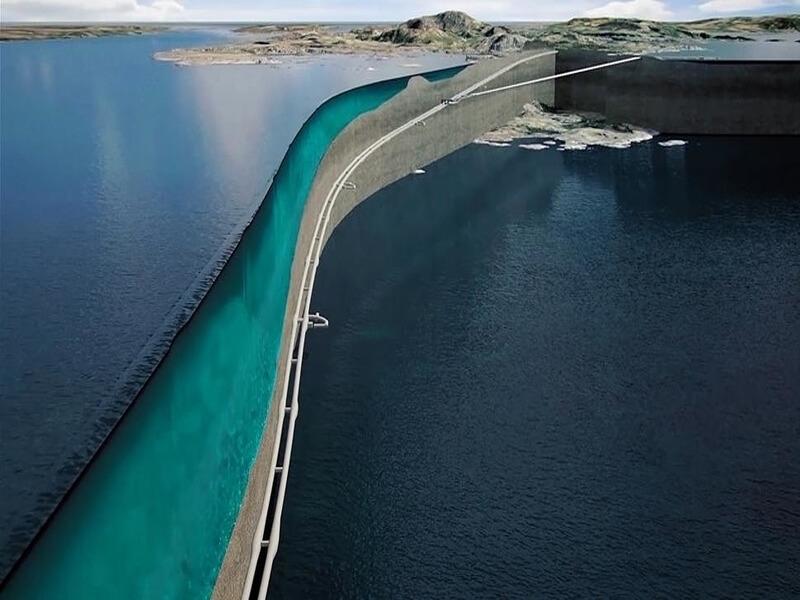
The Rogfast Tunnel, currently under construction beneath Boknafjord, is set to become the world’s longest and deepest undersea road tunnel. Stretching approximately 27 kilometres and reaching depths of nearly 390 metres below sea level, the project represents one of the most technically demanding transportation infrastructures ever attempted.
But Rogfast is far more than a record-breaking tunnel. It is a remarkable demonstration of how modern engineering can overcome some of the most challenging geological, geographical, and logistical obstacles on Earth. From high-pressure groundwater and fractured rock formations to complex underground interchanges and advanced ventilation systems, every aspect of the project showcases innovation at an unprecedented scale.
For civil engineers, architects, construction professionals, and infrastructure planners, Rogfast offers valuable lessons about resilience, adaptability, and the future of large-scale transportation projects.
A Coastline That Challenges Conventional Engineering
To understand why Rogfast is such a significant undertaking, it is important to first understand Norway’s geography.
Norway’s western coastline is one of the most dramatic landscapes in the world. Over thousands of years, glaciers carved deep valleys into the terrain, creating the country’s famous fjords. These spectacular waterways have become iconic features of the Norwegian landscape, attracting visitors from around the globe.
However, what makes these fjords beautiful also makes them extraordinarily difficult for infrastructure development.
Unlike conventional coastal environments, Norwegian fjords are exceptionally deep. In many locations, the seabed extends hundreds of metres below sea level, while steep mountains rise dramatically from the shoreline. Building bridges across these vast expanses is often impractical, and ferry systems remain essential components of transportation networks.
The E39 highway, one of Norway’s most important transportation corridors, stretches more than 1,100 kilometres along the country’s western coast. Despite decades of modernization, drivers currently encounter multiple ferry crossings throughout the route, creating delays and limiting transportation efficiency.
For a nation heavily dependent on industries such as oil and gas, fisheries, manufacturing, and logistics, these transportation bottlenecks have significant economic implications.
The Rogfast project was conceived as a transformative solution that would eliminate one of the most critical ferry crossings while creating a faster, safer, and more reliable connection between major economic centres.
The Vision Behind Rogfast
At its core, Rogfast is designed to improve connectivity across Boknafjord, one of Norway’s largest fjords.
The completed tunnel will connect communities north and south of Stavanger, one of Norway’s most important urban and industrial centres. Travel times will be significantly reduced, freight transportation will become more efficient, and dependence on weather-sensitive ferry operations will diminish.
Yet achieving these benefits requires overcoming engineering challenges rarely encountered elsewhere.
The tunnel consists of twin bores running beneath the fjord. At its deepest point, motorists will travel approximately 390 metres below sea level. To put this into perspective, the tunnel floor will sit deeper beneath the water than many skyscrapers are tall above ground.
The scale alone is remarkable. However, depth is only one aspect of the challenge.
Constructing a road tunnel at such depths means confronting immense hydrostatic pressures, unpredictable geological formations, and highly complex construction logistics. Every metre of excavation must be carefully planned, monitored, and supported.
Why Geology Is the Greatest Challenge
Ask any tunnelling expert what determines the success or failure of a major underground project, and the answer is often the same: geology.
While tunnel alignment, equipment, and construction schedules are all important, the ground itself ultimately dictates what is possible.
The Rogfast route passes through multiple rock formations, each presenting unique engineering challenges. Some sections consist of relatively stable rock types suitable for efficient excavation. Others contain fault zones where millions of years of tectonic activity have fractured and weakened the rock mass.
These fault zones create significant uncertainty.
Fractured rock frequently contains groundwater under immense pressure. At depths approaching 400 metres below sea level, even small fissures can become pathways for large volumes of water entering the tunnel.
Unexpected water inflows can disrupt excavation activities, damage equipment, compromise stability, and create serious safety risks.
Unlike surface construction projects, underground works often reveal new geological conditions only after excavation progresses. As a result, engineering teams must continuously adapt their strategies based on real-time observations and geological assessments.
For Rogfast, geology is not simply another project variable—it is arguably the defining factor influencing every construction decision.
Why Engineers Rejected Tunnel Boring Machines
Many people associate major tunnelling projects with Tunnel Boring Machines (TBMs), the enormous mechanized systems that excavate tunnels using rotating cutter heads.
TBMs have been used successfully on many of the world’s largest underground projects, including metro systems, railway tunnels, and utility corridors.
Interestingly, Rogfast does not use a TBM.
Instead, engineers selected the Norwegian Tunnelling Method, a drill-and-blast approach that has been refined over decades of Scandinavian tunnelling experience.
At first glance, this decision may seem counterintuitive. TBMs can achieve impressive production rates and are often considered the preferred solution for large tunnels.
However, Rogfast’s geological uncertainty makes flexibility more valuable than speed.
When a TBM encounters unexpected groundwater, unstable rock, or fault zones, responding can be extremely difficult. The machine itself may extend hundreds of metres behind the excavation face, limiting access and complicating emergency interventions.
The drill-and-blast method offers significantly greater adaptability.
Engineers can inspect geological conditions after each blast, adjust support systems immediately, and modify excavation strategies as conditions evolve. This flexibility is essential when working beneath deep fjords where unexpected challenges can emerge without warning.
The choice illustrates an important engineering principle: the most advanced technology is not always the best solution. Sometimes, proven methods provide greater reliability under complex conditions.
The Excavation Proces
The excavation cycle used on Rogfast is both systematic and highly sophisticated.
Work begins with detailed geological investigations. Probe holes are drilled ahead of the tunnel face to identify groundwater conditions and assess rock quality. These investigations provide critical information that guides subsequent construction activities.
Before excavation can proceed, engineers often perform extensive grouting operations.
Microfine cement mixtures are injected into surrounding rock under high pressure, sealing fractures and reducing groundwater inflow. This process creates a protective barrier around the excavation area, improving both safety and stability.
Once ground conditions have been secured, surveyors establish precise drilling patterns using advanced laser-guided equipment.
Specialized drill jumbos then create dozens of carefully positioned holes within the rock face. These holes are loaded with explosives according to engineered blasting designs intended to maximize excavation efficiency while minimizing damage to surrounding rock.
Following detonation, construction crews remove blasted material, inspect newly exposed surfaces, and install support systems.
Shotcrete is applied to stabilize exposed rock surfaces. Rock bolts provide reinforcement, while waterproofing systems help manage groundwater infiltration. Eventually, concrete lining panels are installed to create the final tunnel structure.
This cycle repeats continuously, advancing the tunnel incrementally through the mountain.
Although progress may appear slow compared with some mechanized methods, the approach provides unparalleled control in challenging geological conditions.
Managing Water Pressure Deep Below the Fjord
One of the most fascinating engineering challenges at Rogfast involves groundwater management.
At depths approaching 390 metres below sea level, water pressure becomes enormous. Any fracture connected to groundwater reservoirs can release significant volumes of water into the excavation.
Engineers have reported inflows measured in thousands of litres per minute during certain breakthrough events.
Managing these conditions requires extensive preparation.
High-capacity pumping systems are positioned throughout the construction works. Continuous geological monitoring helps identify potential risk zones before excavation reaches them. Grouting operations are carefully planned to reduce permeability and control groundwater movement.
The ability to respond rapidly to water ingress is one of the primary reasons drill-and-blast construction was selected.
Each excavation stage becomes a carefully coordinated exercise involving geologists, surveyors, engineers, equipment operators, and safety specialists working together to maintain control over an unpredictable underground environment.
Building the World’s Deepest Underground Interchange
Perhaps the most extraordinary feature of the Rogfast project is the underground interchange at Kvitsøy.
Located beneath a small island near the centre of the tunnel alignment, this massive underground junction serves as both an access point and a critical operational hub.
The interchange includes multiple tunnel connections, slip roads, roundabouts, access routes, ventilation infrastructure, and cross passages arranged across several underground levels.
Constructing such a facility approximately 250 metres below ground represents a remarkable engineering achievement.
Unlike traditional highway interchanges, where designers can work in open space, every component of the Kvitsøy interchange must be excavated within solid rock. Geometric design, structural support, drainage, ventilation, and traffic operations must all be coordinated within a highly constrained underground environment.
The resulting network resembles a three-dimensional transportation system carved directly into the earth.
For transportation engineers and underground infrastructure specialists, the interchange represents one of the most innovative aspects of the entire project.
Solving the Ventilation Challenge
Long road tunnels present unique environmental challenges.
Vehicle emissions, heat generation, and emergency smoke management all require sophisticated ventilation solutions. As tunnel length increases, these challenges become increasingly complex.
At 27 kilometres, Rogfast demands one of the most advanced tunnel ventilation systems ever developed.
Hundreds of jet fans will help move air through the tunnel network. Additional ventilation facilities located at tunnel portals support airflow management.
However, the project’s most distinctive ventilation feature is located at Kvitsøy.
Massive vertical shafts extend between the underground tunnel system and the surface. These shafts serve as critical pathways for air exchange, allowing fresh air to enter while removing contaminated air from the tunnel environment.
Constructing these shafts required specialized drilling techniques, careful stabilization measures, and extensive underground excavation.
Without this ventilation infrastructure, safe operation of the tunnel would not be possible.
Sustainability and Modern Construction Practices
Although Rogfast is primarily a transportation project, it also reflects broader trends within the construction industry.
Norway has long emphasized environmental responsibility and sustainable development. These priorities are evident throughout the project.
Many construction activities utilize electrically powered equipment where practical. Reducing emissions within underground environments improves both environmental performance and worker safety.
Excavated rock material is being repurposed for land reclamation and local infrastructure improvements. Rather than treating excavated material as waste, project planners have incorporated it into broader regional development initiatives.
The project also demonstrates the value of community engagement. Local stakeholders have been actively involved throughout planning and implementation phases, ensuring that infrastructure improvements deliver benefits beyond transportation alone.
These practices illustrate how modern infrastructure projects increasingly integrate engineering performance, environmental responsibility, and community development objectives.
Lessons for the Global Construction Industry
The significance of Rogfast extends far beyond Norway.
Around the world, growing populations, urbanization, and economic development are creating demand for increasingly ambitious infrastructure projects. Many of these initiatives will involve challenging geological conditions, environmental constraints, and complex stakeholder requirements.
Rogfast offers several important lessons.
First, engineering success depends on understanding and respecting local conditions. Solutions that work elsewhere may not be appropriate for every project.
Second, flexibility remains one of the most valuable assets in construction. Technologies and methodologies must be selected based on project-specific requirements rather than industry trends.
Third, collaboration across disciplines is essential. Geologists, civil engineers, structural engineers, environmental specialists, contractors, and public agencies all contribute to project success.
Finally, ambitious infrastructure investments can deliver transformational economic and social benefits when executed effectively.
Looking Ahead to 2033
When Rogfast opens, most drivers will likely experience it as simply another road tunnel.
They will enter one portal, travel beneath the fjord, and emerge on the opposite side within minutes.
Few will fully appreciate the extraordinary engineering hidden behind the tunnel walls.
Yet beneath the surface lies one of the most complex transportation infrastructure projects ever undertaken. Thousands of workers, engineers, designers, and specialists are collectively creating a structure that pushes the limits of modern construction capability.
The project is not merely establishing new world records for length and depth. It is expanding the boundaries of what engineers can achieve in some of the most challenging environments on Earth.
As Norway continues pursuing additional fjord crossings and other ambitious infrastructure initiatives, Rogfast will likely serve as both a benchmark and a training ground for future innovations.
For the civil engineering, construction, and architecture industries, the tunnel stands as a powerful reminder that even the most formidable natural barriers can be overcome through ingenuity, collaboration, and technical excellence.
The world’s longest and deepest undersea road tunnel is not simply being built beneath a fjord—it is helping shape the future of infrastructure engineering itself.
No responses yet