Few places in human history have fascinated architects, engineers, urban planners, and construction professionals quite like Kowloon Walled City.
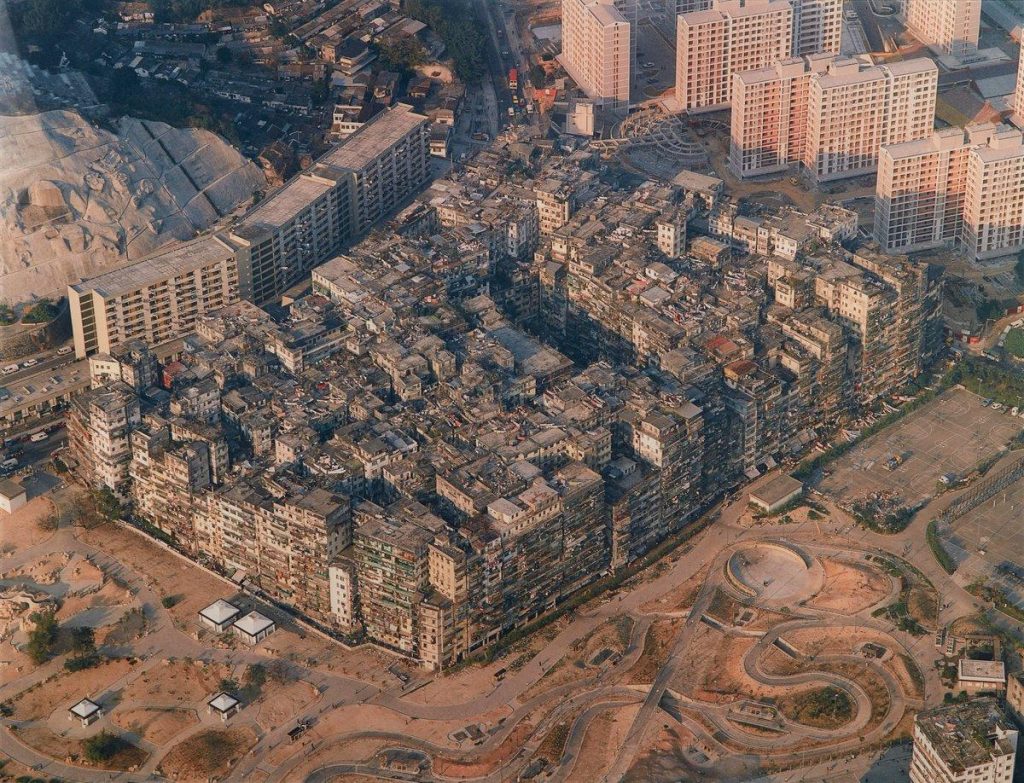
Often described as the most densely populated place ever built, Kowloon Walled City occupied just 6.5 acres of land in Hong Kong while housing an estimated 33,000 to 50,000 residents at its peak. What began as a small Chinese military outpost evolved into an extraordinary urban phenomenon that challenged conventional ideas about planning, construction, governance, and community development.
To some observers, it represented an urban nightmare characterized by overcrowding, poor sanitation, and unregulated construction. To others, it stood as a remarkable example of human adaptability, self-organization, and resilience.
From a civil engineering and architectural perspective, Kowloon Walled City offers valuable lessons about urban density, informal construction, infrastructure limitations, and the critical role of planning regulations in maintaining safe and sustainable cities.
This article explores the history, architecture, engineering challenges, and lasting legacy of one of the most extraordinary urban environments ever created.
The Origins of Kowloon Walled City
The origins of Kowloon Walled City can be traced back to the Song Dynasty when the area served as a military outpost used to monitor salt production and coastal activities.
Its significance increased during the 19th century as trade between China and Western nations expanded rapidly. Following Britain’s growing influence in the region and the First Opium War, Chinese authorities reinforced the military fort at Kowloon by constructing defensive walls around the settlement.
These fortifications gave rise to the name “Kowloon Walled City.”
The political circumstances that followed would ultimately determine the city’s unique future.
In 1898, Britain secured a 99-year lease over the New Territories surrounding Hong Kong. However, Kowloon Walled City remained technically under Chinese jurisdiction despite being entirely surrounded by British-controlled territory.
This unusual arrangement created a legal ambiguity that lasted for decades. Neither Britain nor China exercised full control over the area, creating a regulatory vacuum that would eventually allow the city to develop in unprecedented ways.
The Refugee Crisis That Fueled Urban Growth
The transformation of Kowloon Walled City into a densely populated urban settlement occurred primarily during the mid-20th century.
Following World War II and the Chinese Civil War, Hong Kong experienced a massive influx of refugees seeking safety, employment, and housing.
As the city’s population surged, affordable housing became increasingly scarce.
Kowloon Walled City presented a unique opportunity. Due to its uncertain legal status, government oversight was minimal, making it an attractive location for those who could not afford housing elsewhere.
What began as informal settlements quickly evolved into a densely packed residential community.
Buildings were expanded vertically and horizontally whenever space became available. Individual structures merged together, creating a continuous mass of interconnected buildings that eventually formed the iconic appearance for which the city became famous.
By the 1980s, Kowloon Walled City had become one of the most densely populated places in the world.
Architecture Without Architects
One of the most fascinating aspects of Kowloon Walled City is that it evolved largely without formal planning.
Unlike conventional urban developments designed by architects, engineers, and planners, the city grew organically through countless individual construction decisions made by residents and property owners.
This resulted in a highly irregular urban form.
Buildings were constructed directly adjacent to one another, often sharing walls and structural elements. As additional floors were added over time, the city gradually transformed into a continuous architectural mass rather than a collection of individual buildings.
The urban fabric became so dense that many lower-level corridors received little or no natural sunlight.
Narrow passageways wound through the city like tunnels. In some locations, corridors measured less than one meter in width.
The absence of formal planning produced a unique spatial environment unlike any conventional city.
While modern architects often design buildings according to carefully organized circulation patterns, Kowloon developed through incremental adaptation and necessity.
The result was an urban maze that fascinated researchers and designers worldwide.
Structural Engineering Challenges
From a structural engineering perspective, Kowloon Walled City presents a remarkable case study.
Most buildings were constructed using reinforced concrete, which became the dominant construction material throughout Hong Kong during the post-war period.
However, unlike formally designed structures, many buildings inside Kowloon were expanded incrementally over time.
Additional floors were frequently added without comprehensive structural analysis.
Load paths were often modified as new construction connected neighboring buildings. In many cases, structural systems evolved in response to immediate needs rather than long-term engineering considerations.
This raises important questions about structural capacity, foundation performance, and load distribution.
Despite the apparent risks, catastrophic structural failures were surprisingly rare.
Several factors contributed to this outcome.
First, most buildings remained relatively low-rise compared to modern skyscrapers. Height restrictions imposed by nearby Kai Tak Airport generally limited structures to approximately fourteen stories.
Second, reinforced concrete construction provided significant durability and redundancy.
Third, continuous modifications often resulted in buildings supporting one another through interconnected structural systems.
Nevertheless, the city’s structural condition remained a major concern for authorities, particularly as buildings aged and maintenance standards varied significantly.
Infrastructure Under Extreme Density
Perhaps the most important engineering lesson from Kowloon Walled City concerns infrastructure.
Modern cities depend on extensive infrastructure networks that are carefully planned to support population growth.
These systems include:
- Water supply
- Wastewater management
- Stormwater drainage
- Electrical distribution
- Ventilation
- Transportation access
- Waste collection
Kowloon Walled City operated with severe limitations in nearly all these areas.
Only a small number of official water connections served thousands of residents. Water often had to be manually transported through the city’s maze-like corridors.
Electrical systems evolved informally as residents tapped into external power sources. Over time, a complex web of wiring spread throughout the city.
Sanitation posed one of the greatest challenges.
The extreme density made waste management difficult, and ventilation was often inadequate. Combined with limited sunlight, these conditions contributed to poor indoor environmental quality.
For engineers, Kowloon demonstrates the critical importance of infrastructure planning in high-density developments.
Density alone is not inherently problematic. However, density without corresponding infrastructure capacity creates significant health and safety concerns.
Urban Density: Success or Failure?
Urban density remains one of the most debated topics in modern planning.
Many of today’s most successful cities rely on relatively high-density development to reduce transportation costs, improve sustainability, and support economic activity.
However, Kowloon Walled City illustrates the difference between planned density and uncontrolled density.
Well-designed high-density environments incorporate:
- Adequate public spaces
- Natural light access
- Ventilation corridors
- Emergency access routes
- Reliable infrastructure
- Structural safety standards
Kowloon lacked many of these elements.
Yet despite its shortcomings, the city successfully housed tens of thousands of people within a remarkably small footprint.
This raises an important question for modern planners:
How much density is too much?
The answer lies not in population numbers alone but in the quality of infrastructure and design supporting that population.
Informal Construction and Building Regulations
One of the most important lessons from Kowloon Walled City concerns building regulation.
Construction codes exist for a reason.
They establish minimum standards for structural integrity, fire safety, accessibility, ventilation, sanitation, and public health.
Within Kowloon, many of these standards were absent or inconsistently enforced.
As a result, buildings evolved according to immediate needs rather than comprehensive planning principles.
The city effectively became a large-scale experiment in informal urban development.
While residents demonstrated remarkable ingenuity, the absence of regulations also created significant risks.
Narrow corridors complicated emergency response efforts.
Limited fire protection increased vulnerability to disasters.
Unregulated structural modifications introduced uncertainty regarding building performance.
Modern building codes are often viewed as obstacles by developers or property owners.
However, Kowloon Walled City serves as a powerful reminder of why these regulations exist.
They help ensure that urban growth remains safe, sustainable, and resilient.
Community and Social Infrastructure
Despite its physical challenges, Kowloon Walled City developed a strong sense of community.
This aspect is often overlooked in discussions focused solely on crime and overcrowding.
Residents established schools, religious centers, clinics, businesses, and social organizations.
Families raised children within the city for generations.
Community networks compensated for many of the services typically provided by government institutions.
For urban planners, this demonstrates that successful communities depend on more than physical infrastructure.
Social infrastructure is equally important.
People naturally develop systems of cooperation and mutual support when formal institutions are absent.
While physical conditions may have been difficult, many former residents describe a strong sense of belonging and neighborhood identity.
Demolition and Redevelopment
By the 1980s, both British and Chinese authorities recognized that Kowloon Walled City faced significant long-term challenges.
Concerns regarding structural safety, fire hazards, sanitation, and public health continued to grow.
In 1984, Britain and China signed the Sino-British Joint Declaration outlining the future transfer of Hong Kong.
This agreement also paved the way for resolving the status of Kowloon Walled City.
Following negotiations, authorities decided to clear the site.
The relocation process involved compensating thousands of residents and businesses.
Demolition began in 1993 and was completed in 1994.
The site was subsequently redeveloped into Kowloon Walled City Park.
Today, visitors can explore landscaped gardens and preserved historical elements, including the original yamen building.
The transformation reflects a complete shift from one of the world’s most crowded urban environments to a public green space.
Lessons for Modern Engineers, Architects, and Urban Planners
Although Kowloon Walled City disappeared decades ago, its lessons remain highly relevant.
For civil engineers, it demonstrates the importance of infrastructure capacity and structural oversight in supporting urban growth.
For architects, it highlights the relationship between building form, natural light, ventilation, and human well-being.
For urban planners, it illustrates the consequences of rapid development occurring without coordinated governance.
Perhaps most importantly, Kowloon challenges conventional assumptions about cities.
It reveals both the extraordinary adaptability of human communities and the risks associated with uncontrolled urbanization.
As cities around the world continue to grow, many regions face increasing pressure to accommodate larger populations within limited land areas.
The story of Kowloon Walled City serves as both a warning and a source of inspiration.
It reminds us that density alone does not determine the success or failure of urban environments.
What matters is how that density is designed, supported, regulated, and maintained.
Conclusion
Kowloon Walled City remains one of the most remarkable urban experiments in human history.
It emerged from a unique political situation, grew through necessity, and evolved into a dense, self-organized community unlike any other.
For architects, engineers, and construction professionals, the city provides invaluable insights into urban development, infrastructure planning, structural resilience, and the human capacity to adapt.
Its physical structures may be gone, but the lessons it offers continue to influence discussions about sustainable urban growth, housing affordability, and city design.
Few places demonstrate the complex relationship between architecture, engineering, governance, and community as clearly as Kowloon Walled City.
And that is precisely why it continues to fascinate professionals and researchers around the world.
No responses yet