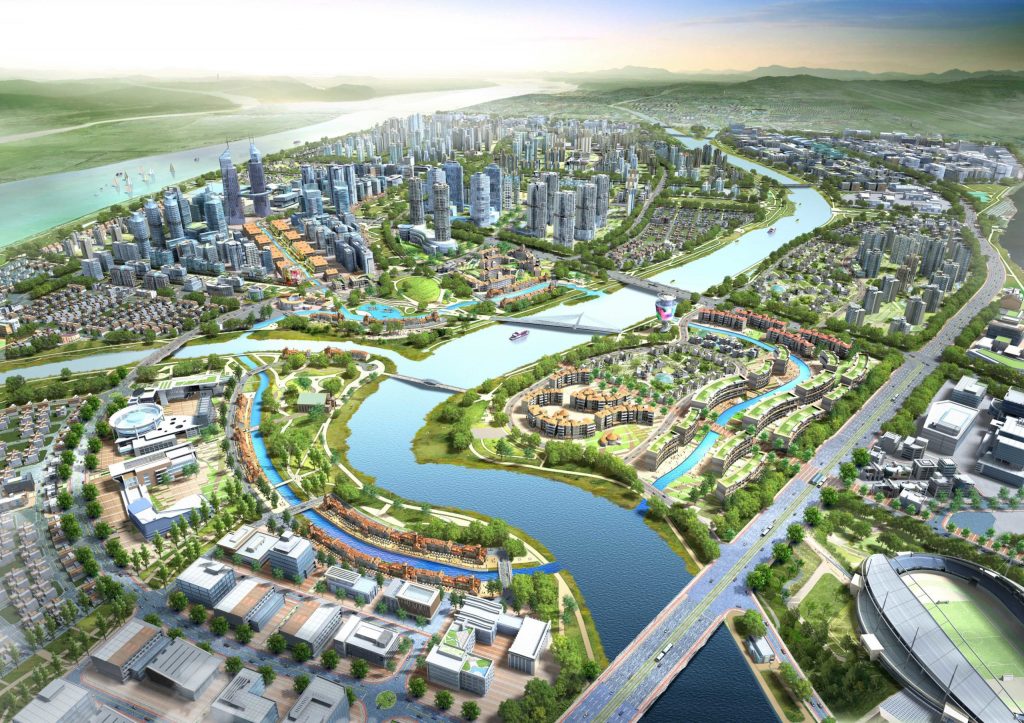
In an era where cities are redefining themselves to address sustainability, digital transformation, and human‑centric living, Sejong Smart City in South Korea stands as one of the world’s most ambitious urban development initiatives. Designed to embody cutting‑edge smart technologies, energy‑efficient architecture, and advanced civic infrastructure, Sejong aims not merely to house people but to transform how urban environments operate, interact, and evolve. This blog post examines the civil engineering, architectural innovation, infrastructure planning, energy efficiency systems, construction challenges, and broader implications of the Sejong Smart City District — especially within the 5‑1 National Pilot Smart City area.
1. Background and Vision of Sejong Smart City
Sejong City was created as South Korea’s new administrative capital to relieve congestion in Seoul, redistribute economic activity, and pioneer future‑oriented urban planning. Within this setting, the Sejong National Pilot Smart City — particularly the 5‑1 living zone — serves as an experimental platform for integrating smart city technologies and sustainability principles on a city‑wide scale. SMART CITY KOREA+1
The overarching vision is to create a human‑centric, eco‑friendly, data‑driven urban environment, where digital innovation supports citizen well‑being and sustainable development across key domains such as mobility, energy, governance, and quality of life. SMART CITY KOREA
2. Smart Infrastructure: The Backbone of Seamless Urban Functionality
2.1 Integrated Urban Systems
Civil infrastructure in Sejong Smart City goes beyond traditional utilities and transport to include intelligent networks that sense, monitor, and respond in real time. Sensors embedded throughout the city collect data on traffic, environmental conditions, energy usage, and public safety. This data feeds into an integrated urban platform that enables:
- Smart traffic signal control that adjusts timing based on real‑time flow.
- Automated incident detection and response systems.
- Environmental monitoring for air quality and weather hazards.
- Real‑time data dashboards for city managers and planners. SMART CITY KOREA
From a civil engineering perspective, designing such infrastructure requires robust communication networks, redundancy systems, and real‑time data processing capabilities. The integration of ICT systems with traditional infrastructure layers (power, water, roads) is a fundamental innovation in smart city design.
3. Energy Efficiency and Sustainable Building Design
3.1 Green and Zero‑Energy Buildings
Sejong’s architectural strategy emphasizes energy‑efficient buildings using advanced materials, renewable systems, and smart controls. Two key components are:
- Zero‑Energy Buildings (ZEBs): Buildings designed to generate as much energy as they consume over a year, using a combination of passive design, renewable generation (like solar photovoltaics), and efficient HVAC systems. Global Economic Times
- High‑Performance Envelopes: Enhanced insulation, high‑efficiency windows, and strategic orientation minimize heating and cooling loads, crucial in Sejong’s seasonal climate. SMART CITY KOREA
Examples such as the Sejong City Lauren House — one of Korea’s first certified zero‑energy homes — demonstrate how residential architecture can push energy performance boundaries. Canada Wood Group
From an architectural engineering standpoint, designing ZEBs involves:
- Passive solar analysis to capture or reject heat using orientation and shading.
- Building Energy Management Systems (BEMS) that coordinate lighting, HVAC, and renewable generation.
- Integration of Building‑Integrated Photovoltaics (BIPV) which blend solar arrays into façades and roofs. urbanNext
4. Renewable Energy and Smart Grids
Sejong Smart City is not just about efficient buildings but also about transforming how energy is produced, distributed, and consumed:
- Distributed Renewable Energy: Photovoltaic installations and geothermal heat pumps spread throughout residential and commercial zones provide clean energy at source. Urban & Regional Cooperation
- Smart Grid Implementation: Smart grids enable two‑way energy flows between buildings and the grid, facilitating local storage, peak load management, and greater resilience. SMART CITY KOREA
- Energy Storage Systems (ESS): Batteries and other storage solutions balance intermittent renewable generation with demand patterns, smoothing out supply and enhancing reliability. urbanNext
These systems require collaboration between electrical engineers, renewable energy specialists, and urban planners to ensure load balancing, cybersecurity, and scalable infrastructure.
5. Waste Management and Environmental Systems
An often overlooked but critical element of sustainable cities is waste infrastructure. Sejong uses underground automated waste collection systems that transport refuse via networked pipelines to centralized processing facilities — reducing street‑level waste accumulation, truck traffic, and emissions. Envac
This integration of waste systems into the smart infrastructure framework is a hallmark of innovative urban engineering, requiring precise civil works for underground piping, access inlets, and automated sorting systems. It also reflects a broader commitment to zero‑waste and circular economy principles.
6. Mobility and Transportation Planning
Although primarily known for its smart energy focus, Sejong also embraces modern transportation systems:
- Bus Rapid Transit (BRT): Providing efficient mass transit while reserving space for future rail integration, BRT systems reduce congestion and emissions. 7 Wonders Future Cities
- Smart Parking and Mobility‑on‑Demand: Data‑driven apps and sensors optimize parking supply and reduce the need for private vehicle ownership. Global Economic Times
Designing transportation infrastructure requires deep civil engineering expertise in traffic modeling, roadway geometric design, and pedestrian access planning — all while ensuring seamless integration with smart systems.
7. Citizen‑Centric Urban Planning and Governance
A defining characteristic of Sejong Smart City is its citizen‑centric philosophy. Civic participation is embedded into planning and governance frameworks, ensuring that technology serves real human needs rather than technology for its own sake. SMART CITY KOREA
Key principles include:
- Open Data Platforms: Citizens and businesses can access data to develop services, engage in governance, and optimize operations.
- AI‑Assisted Public Services: From healthcare alerts to safety monitoring, AI enhances responsiveness and predictive capabilities.
- Decentralized Digital Services: Services that allow residents to interact with government and utilities without physical infrastructure barriers. SMART CITY KOREA
This blend of civil engineering, urban planning, and social infrastructure positions Sejong as a model for participatory smart cities.
8. Architectural Concepts and Public Realm Design
Beyond functional buildings and smart systems, architectural planning within Sejong prioritizes:
- Green spaces and water management corridors that enhance biodiversity and urban comfort. 7 Wonders Future Cities
- Integration with natural landscapes, leveraging rivers and wetlands as urban features rather than barriers. SMART CITY KOREA
- Public spaces that promote social interaction, including parks, civic squares, and trails. SMART CITY KOREA
From an architectural and landscape engineering perspective, this approach reinforces biophilic design principles that link human well‑being to natural elements.
9. Construction Challenges and Implementation Realities
While Sejong represents an advanced prototype for future cities, it has not been without challenges:
9.1 Phased Infrastructure Development
Implementing smart and sustainable infrastructure at the scale of an entire urban district demands phased construction, staged utility deployment, and coordinated ICT rollout. The complexity arises from balancing civil works (roads, sewerage, power) with smart infrastructure (sensors, data networks), requiring meticulous project management.
9.2 Integration of Diverse Technologies
Integrating energy systems, real‑time data platforms, AI analytics, and physical infrastructure is inherently interdisciplinary. Challenges include:
- System compatibility and interoperability
- Cybersecurity of urban networks
- Training of maintenance personnel for smart systems
These challenges underscore the importance of cross‑sector collaboration between engineers, IT specialists, architects, and policymakers.
9.3 Balancing Innovation with Community Needs
While technology is central, ensuring that citizens feel ownership and derive tangible benefits is vital. Smart city projects worldwide sometimes veer toward techno‑centrism; Sejong’s emphasis on citizen participation and practical service delivery aims to mitigate that risk.
10. Broader Impact and Future Outlook
Sejong Smart City serves as a living laboratory for future urbanization models — not just for South Korea, but for cities worldwide looking to balance sustainability, livability, and innovation. The lessons emerging from Sejong’s implementation include:
- The power of data‑driven decision making in urban operations.
- The feasibility of net‑zero and low‑energy building clusters at scale.
- The benefits of integrated civic infrastructure that transcends traditional silos.
- The necessity of holistic planning that aligns energy, mobility, housing, and governance.
As Sejong’s development continues toward its 2030 vision and beyond, its legacy will likely be measured not only in technological milestones but in how it enhances everyday life for its residents and how its innovations diffuse globally.
Conclusion
The Sejong Smart City Development exemplifies how modern urban planning can reimagine cities for the 21st century. Through advanced civic infrastructure, energy‑efficient architecture, renewable energy systems, and smart governance models, Sejong is forging pathways toward sustainable, resilient, and human‑centered urban living. The interplay of civil engineering, architectural innovation, ICT integration, and community participation makes it a compelling case study for scholars, planners, and engineers alike.
No responses yet