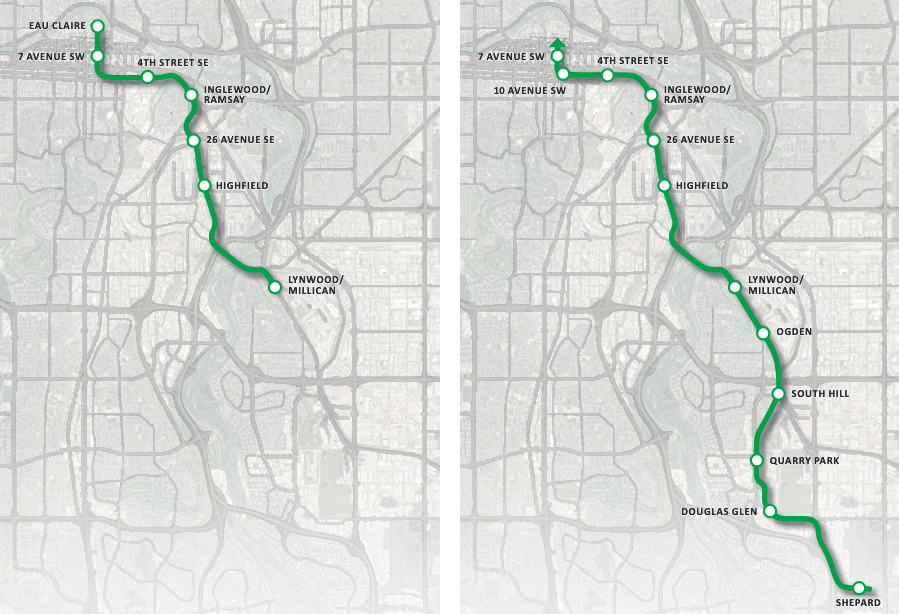
The Green Line Light Rail Transit (LRT) project is Calgary’s most ambitious public infrastructure undertaking in the city’s history — a transformative investment in sustainable urban mobility, economic growth, and civil engineering excellence. Stretching over an eventual 46 kilometres and connecting communities from the southeast through downtown to the northern reaches of the city, the Green Line represents a bold vision for Calgary’s future. With construction now underway on the first segment, the project embodies significant engineering innovation, major architectural and civil design decisions, complex construction challenges, and deep implications for community shaping and transit‑oriented development. https://www.calgary.ca+1
Project Overview: Vision, Scale, and Phasing
The Green Line LRT has been long planned as an integral piece of Calgary’s Rapid Transit Network, designed to expand connectivity across the city and integrate with existing Red and Blue LRT lines. Phase 1 — the current focus — includes:
- A southeast (SE) segment from Shepard to the future Event Centre/Grand Central Station, consisting of approximately 16 km of twin track and 10 stations.
- Additional planned Downtown and northern segments which will eventually extend the line to a total of roughly 46 km and 29 stations.
- Supporting infrastructure, including three park‑and‑ride lots, a major maintenance and storage facility (MSF), and a fleet of 28 modern low‑floor light rail vehicles (LRVs). https://www.calgary.ca
Phase 1 is being delivered with $6.248 billion in combined funding from federal, provincial, and municipal governments, making it the most significant investment in Calgary’s transit history. https://www.calgary.ca
Construction on the SE segment officially broke ground in June 2025, marking the culmination of more than a decade of planning, community engagement, design work, and political negotiations. https://www.calgary.ca
Civil Engineering Concepts at the Core
Designing and building a modern light rail system like the Green Line requires mastery of several core civil engineering disciplines. These include:
1. Track Geometry and Alignment Design
LRT track alignment is not simply a straight line from point A to B. Engineers must evaluate:
- Horizontal and vertical curves to ensure passenger comfort, safe train speeds, and minimal wear on wheels and rails.
- Grade limits that balance train performance, energy efficiency, and urban integration.
- Interaction with existing infrastructure such as roadways, utilities, and buildings.
The Green Line’s alignment weaves through dense urban corridors, suburban neighbourhoods, and transit corridors, demanding careful geospatial and structural planning. https://www.calgary.ca
2. Bridges and Structural Engineering
The SE segment includes multiple bridges over roadways and rail corridors. Bridge design for light rail must consider:
- Dynamic loads from fully‑loaded LRVs.
- Load distribution and vibration control — ensuring structural integrity over decades.
- Foundations that address Calgary’s soil conditions, frost depth, and potential settlement.
Designing for seismic resilience and long‑term durability are also key considerations in the structural design process.
3. Earthworks and Grading
Constructing a level, stable track bed involves extensive earthworks:
- Cutting and filling to create stable embankments or trenches.
- Drainage design — essential in Calgary’s seasonal climate to avoid water accumulation beneath tracks.
- Retaining structures where elevation changes are steep or adjacent land development is sensitive.
4. Systems Engineering
Light rail systems incorporate complex subsystems that must work in concert:
- Electrical and power systems (overhead catenary lines, substations).
- Signalling and communications for safety and real‑time train control.
- Station design for accessibility, passenger flow, and integration with multi‑modal transport.
Architectural and Urban Design Elements
While the civil infrastructure forms the skeleton of the Green Line, architectural and urban design bring human‑centred form and function to the system.
Station Architecture and Streetscape
Stations along the Green Line are being designed to reflect community character while ensuring functionality:
- Canopies and shelter design that protect passengers from Calgary’s varied weather conditions.
- Accessible platforms that accommodate universal access and efficient passenger flows.
- Integration with pedestrian and cycling paths, ensuring seamless connections to surrounding neighbourhoods. https://www.calgary.ca
Many station areas are also positioned for transit‑oriented development (TOD) — mixed‑use communities that promote walkability, reduce car dependence, and boost economic activity around transit hubs. https://www.calgary.ca
Maintenance and Storage Facility (MSF)
The MSF — a critical facility where trains are stored, inspected and maintained — is itself a piece of functional architecture. It must provide:
- Large clear‑span spaces for multiple rail vehicles.
- Integration of mechanical, electrical, and control systems to support fleet operations.
- Room for future expansion to accommodate growth of the line. https://www.calgary.ca
Train Design: Urbos 100 LRVs
The Green Line’s rolling stock — Urbos 100 vehicles — are the first low‑floor LRVs in Calgary. This low‑floor design enhances accessibility by minimizing platform height differences and supports faster boarding times. https://www.calgary.ca
Construction Strategy and Delivery Models
Like many large infrastructure projects, the Green Line has shifted its delivery strategy over time in response to market and fiscal conditions.
Phased Construction and Contracting
To manage risk and costs, City officials adopted a multi‑contract delivery strategy, breaking the project into discrete scopes — from track and civil works to bridge construction and station finishes. This approach allows for:
- Greater control over individual contracts
- Targeted procurement based on discipline (e.g., electrical, structural, civil)
- Flexibility to negotiate terms and schedules with specialized contractors
This is an alternative to a single “design–build–finance” contract, which is less nimble in responding to project cost inflation. Calgary Newsroom
Design‑Build Collaboration
In the earlier development phase, a Development Partner — a consortium of constructors and engineering firms — worked closely with city planners to refine design, assess risks, and solidify cost estimates. This collaboration helps reduce surprises during construction.
Enabling and Early Works
Before main construction, contractors have completed enabling works such as:
- Utility relocation
- Site clearing and demolition
- Bridge preparatory work
These preparatory phases are essential to de‑risking later construction and preventing costly delays.
Major Construction Challenges
Building a major urban rail line inevitably confronts technical, societal, and logistical challenges:
1. Funding Variability and Scope Adjustments
The project has faced shifting funding landscapes, including alterations in provincial support that led to revisions in Phase 1 scope and delivery approach. These fiscal realignments required value engineering and design optimization to keep the core project viable. Calgary Newsroom
2. Integration with Existing Urban Fabric
Routing a new rail line through existing city streets, bridges, and utility corridors demands:
- Relocation of buried infrastructure
- Coordination with roadway traffic
- Minimizing disruption to businesses, residents, and commuters
Downtown alignment remains a complex deliberation, with work underway on a functional plan to balance urban impact, cost and community feedback. https://www.calgary.ca
3. Geotechnical and Environmental Considerations
Calgary’s subsoil conditions, freeze–thaw cycles, and groundwater regimes influence foundation design, track bed stability, and stormwater management. The city’s engineers must carefully model these factors to avoid settlement, frost heave, and poor drainage.
4. Constructability in Live Environments
Unlike greenfield construction, the Green Line is being built through busy urban areas, requiring:
- Traffic staging plans
- Pedestrian safety measures
- Noise and vibration mitigation
Construction sequencing must minimize impacts while maintaining productivity.
Community and Future Impact
Beyond engineering and construction, the Green Line LRT is seen as a city‑shaping investment. Key anticipated benefits include:
Transit and Accessibility Gains
The Green Line will significantly reduce travel times compared to existing bus services, improve accessibility for underserved communities in the southeast, and relieve congestion on other major roadways. https://www.calgary.ca
Economic and Environmental Outcomes
By shifting millions of annual vehicle trips to electric transit, the line is expected to reduce greenhouse gas emissions, support job creation (both during and after construction), and unlock enhanced property values near stations. https://www.calgary.ca
Transit‑Oriented Development (TOD)
Alignment with TOD principles promises to stimulate mixed‑use development, greater housing density near stations, and vibrant pedestrian streetscapes. https://www.calgary.ca
Looking Ahead
As of late 2025, design work on multiple SE segment stations is nearing 90 % completion, and work toward an estimated opening in 2031 continues. CityNews Calgary
The downtown segment’s future configuration — whether at‑grade, elevated, or tunneled — remains under study with public engagement planned in 2026, highlighting the complex interplay of engineering feasibility, community values, cost, and urban impact. https://www.calgary.ca
With Calgary’s population expected to grow significantly in coming decades, the Green Line represents not only a transit route but a long‑term strategic investment in sustainable urban mobility, resilient infrastructure, and vibrant urban form.
Conclusion
The Calgary Green Line LRT project is a landmark in modern civil engineering and urban planning. It blends rigorous technical design, complex construction sequencing, architectural context, and forward‑thinking urban strategy. While not without its challenges — from funding shifts to urban integration hurdles — the project exemplifies how contemporary cities can rethink mobility for the 21st century. Its success will be measured not just in steel and concrete, but in how it enhances daily life, connects communities, and catalyzes Calgary’s growth for generations to come.
No responses yet